
Why Your Garbage Disposal Keeps Jamming (and What Helps)
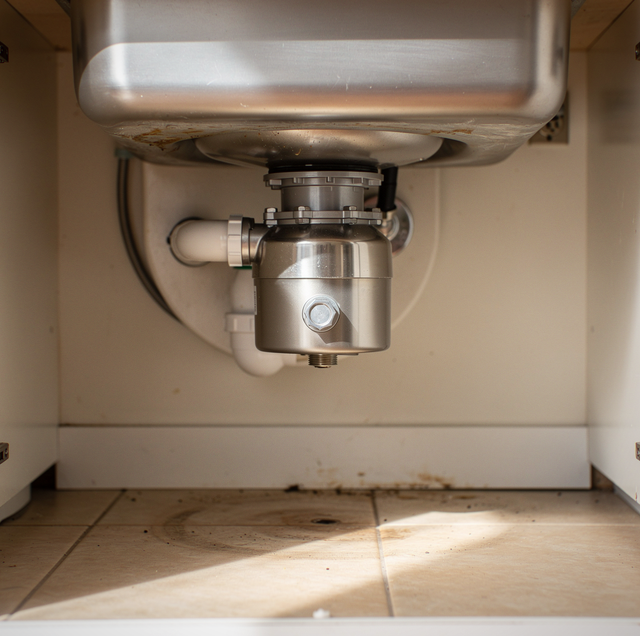
A jammed garbage disposal almost always comes down to one of five things: something fibrous wrapped around the shaft, something hard wedged in the grind ring, grease that's hardened where it shouldn't be, too much dropped in at once, or a motor working against all of that combined. None of those has anything to do with a dull blade, because a disposal doesn't have blades in the first place, and knowing what's actually spinning down there is what stops the guesswork you've probably heard passed around as advice.
The Myths Worth Retiring First
Ice cubes sharpen the blades: A disposal doesn't have blades at all. It has two blunt swiveling metal lugs mounted on a spinning flywheel, and grinding ice can knock loose stuck residue, but nothing is being sharpened because there's nothing shaped like a blade to begin with.
Hot water helps break down grease: This is the opposite of correct. Hot water keeps fat and grease in a liquid state as it heads down the drain, where it can re-solidify further along the pipe and cause a clog well past the disposal itself. Cold water keeps grease solid enough to get chopped into small particles and flushed through before it has a chance to coat anything.
It can handle anything as long as the water's running: Running water helps move ground particles along, but it does nothing to prevent fibrous strands from wrapping around the spinning shaft or a hard object from wedging against the grind ring. Water assists the process; it doesn't override what the mechanism is built to handle.
If it hums but won't turn, the motor is dead: A hum with no rotation almost always means the motor still has power, but the flywheel is mechanically stuck, not that the unit has failed. That's a jam, and it usually clears with the reset button or a manual turn, not a replacement.
What's Actually Spinning Down There
Inside the housing, an induction motor spins a flywheel plate at roughly 1,725-1,900 rpm, depending on the model. Mounted on that flywheel are two hinged metal lugs, sometimes called impellers, that swing outward from centrifugal force as the plate spins. Those lugs don't cut; they fling food outward with enough force to slam it against a stationary ring lined with small teeth, called the grind ring, which is what actually shreds the material into particles fine enough to wash down the drain with the water running alongside it. The whole process depends on the flywheel spinning freely and the lugs having room to swing. Anything that blocks either of those two things stops the disposal cold.
What Actually Causes a Jam
Fibrous Material: Celery strings, corn husks, onion skins, and artichoke leaves are long, tough fibers that wrap around the spinning shaft instead of breaking apart cleanly, binding the flywheel the same way string can jam a fan blade.
Hard Objects: Bone fragments, fruit pits, glass, or a utensil that slipped down the drain can wedge into the narrow gap between the flywheel and the grind ring, physically blocking rotation rather than simply slowing it.
Grease Buildup: Fat that's gone down warm and re-solidified inside the chamber narrows the clearance the moving parts depend on, adding drag that can be enough to trip the motor's overload protection even without a single hard object involved.
Overloading: Dumping a full bowl of scraps in at once asks the motor to grind more material simultaneously than its torque was designed to handle, which is a different failure mode than a single object jamming the ring, but produces the same stalled result.
Cooking Oil Poured Down the Drain: Oil that goes down the drain in liquid form, whether from a pan or a fryer, doesn't stay liquid for long once it cools in the trap below the disposal. It coats the walls of the drain line and the underside of the grind chamber, and each subsequent grind cycle adds a thin new layer rather than washing the old one away, which is how a disposal that ran fine for years can start binding gradually with no single dramatic cause.
How to Clear a Jam Safely
Never reach into the disposal chamber with your hand, even with the switch off, since a jam can release unexpectedly while your fingers are inside. Start by checking the small red reset button on the unit's underside; a stalled motor trips this thermal overload switch automatically, and pressing it back in after the unit has cooled for a few minutes often restarts it without any further work.
If the reset button doesn't solve it, the offset hex wrench that shipped with the unit (a standard hex key works too) fits into a hexagonal socket at the center of the bottom plate. Turning that wrench firmly back and forth manually rotates the flywheel from underneath, breaking most jams free without ever needing to reach into the chamber from above. Only after that, with the wall switch off or the unit unplugged at the outlet or breaker, should you use tongs or needle-nose pliers to lift out whatever caused the jam.
What Actually Prevents Repeat Jams
Running cold water for a few seconds before starting the disposal, keeping it running through the grind cycle, and letting it run another 15 to 20 seconds afterward flushes particles completely through the trap rather than allowing residue to build up. Feeding scraps in gradually, a handful at a time rather than a full bowl at once, keeps the motor working within its intended load. Fibrous vegetables and starchy foods that expand when wet, like pasta and rice, are worth scraping into the trash rather than the disposal, since both cause the exact wrapping and swelling problems described above. A splash guard left in place, rather than removed for convenience, also keeps utensils and other hard objects from finding their way in accidentally.
Sound as an Early Warning
Most jams announce themselves before they fully stop the flywheel. A grinding motor that shifts from a smooth, even whir to a labored, uneven groan is usually working against partial resistance, often a fibrous strand starting to wrap or a piece of grease-hardened debris narrowing the gap between the lugs and the ring. Shutting the unit off at the first sign of that change, rather than letting it keep grinding against the resistance, gives you a chance to clear a minor obstruction with the reset button or hex wrench before it stalls. A disposal that has fully seized, by contrast, produces only the hum described earlier, with no grinding sound at all, since the flywheel isn't turning enough to make contact with anything.
A rattling sound with no load, when nothing has been put down the drain recently, points to something different: a loose mounting bolt where the unit attaches to the sink flange, or a foreign object like a bottle cap that fell in during dishwashing and is bouncing loosely inside the chamber rather than being actively ground.
Once you know which of the five triggers is actually behind a jam, clearing it stops being guesswork and becomes a two-minute check: reset button first, hex wrench next, tongs only after the power is off. The same handful of habits- cold water first, scraps fed in gradually, fibrous peels in the trash instead of the drain- keep the next jam from happening at all.
Frequently Asked Questions
The hum itself is the motor, and its capacitor is still drawing power and trying to start against something blocking the flywheel; that sound is the mechanical evidence that you're dealing with a jam rather than an electrical failure. A tripped breaker or a blown thermal fuse produces total silence, no hum at all, which is the quickest way to rule out a jam and know the problem is upstream in the wiring instead. A failing start capacitor sounds different again, a weaker, intermittent buzz that comes and goes rather than a steady hum, even with nothing obstructing the flywheel.
An occasional trip from loading too much food at once is normal and not a sign of a problem. A unit that trips repeatedly within the same week, even under light everyday use, more often points to a failing motor bearing or capacitor rather than a food-related jam, and is worth having checked.
Brief empty runs to clear the chamber won't hurt anything, but the lugs and grind ring depend on food particles and water passing through for some lubrication and cooling during normal operation. Extended empty operation wears the grind ring's teeth faster than typical use would.
A handful of ice cubes with a tablespoon or two of coarse salt run through the disposal every few weeks knocks loose residue clinging to the lugs and grind ring through abrasion, not sharpening, since there's nothing shaped like a blade to begin with. Citrus-based tablets and dropped-in peels address odor from trapped food residue rather than any mechanical cleaning, and citrus peels specifically are stringy enough to wrap around the shaft the same way celery does, so tossing whole peels in works against the fibrous-material problem described above rather than helping it.
Most residential disposals use a standard quarter-inch offset service wrench that ships in the box with the unit and fits directly into the hexagonal socket at the center of the bottom plate. A similarly sized generic hex key works as a substitute if the original wrench has been misplaced.
A unit built with stainless steel grind components typically runs 10 to 15 years under normal household use. Units built with cheaper galvanized components tend to corrode and wear out sooner, often within 8 to 10 years, even with the same usage pattern.
Get a stubborn disposal cleared, repaired, or replaced without the guesswork — same-crew visit, no upsell pricing. Ser Plumbing serves Paramount, Bellflower, and Lakewood. Call (310) 953-3566.
