
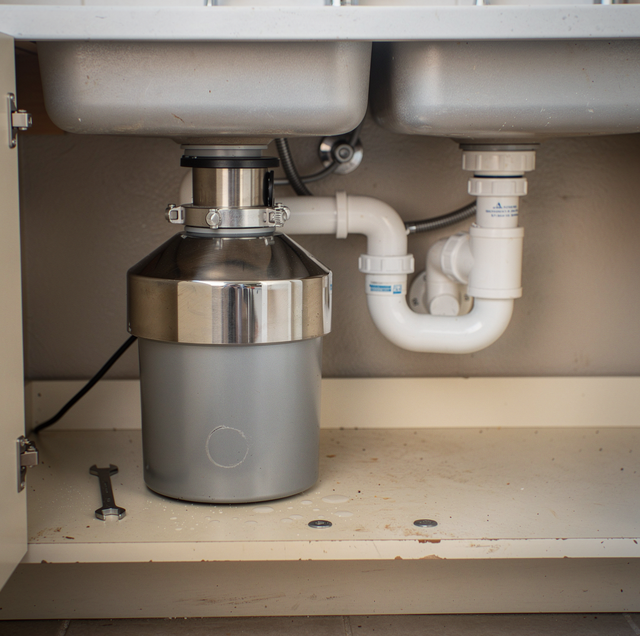
You found the jam. You worked the hex key into the flywheel's center socket, felt it break free, and put the wrench away. You flipped the switch expecting the grind to pick back up where it left off. Instead, the motor runs; you can hear it, steady and full speed, and whatever you drop down the drain just spins in place or drains through half-chewed.
That is a different problem from the one you just solved. A hum with something wedged against the flywheel is what stops rotation in the first place, and freeing it is the fix for that particular symptom. A unit that spins freely and still won't reduce food to a slurry has moved past a blockage and into wear or damage on the parts that do the actual work below the motor. Total silence, no hum at all, points to a separate issue tied to power delivery rather than the grind mechanism. This is about the middle case: the unit runs, and still can't finish the job.
When a Disposal Spins but Does Not Grind
A disposal's motor and its grinding mechanism are separate systems joined at a single shaft. The motor's job is only to spin that shaft at a constant speed; everything that reduces food happens below it, in the grind chamber, where a flywheel carries the impeller lugs and throws waste against the stationary grind ring. When a unit spins freely, sounds normal, and still leaves food behind, the motor has done its job. The fault sits in that lower assembly, not in the windings or the switch.
This distinction matters because it changes what a working diagnosis focuses on. A motor problem shows up as the unit failing to spin at all or going dead, a different symptom picture than a unit that runs and simply won't grind. A grinding problem shows up as normal rotation with poor results: food circles the chamber, drains out in pieces, or comes back up chewed only around the edges. The two most common causes are impeller lugs that have worn down or snapped, and a grind ring whose interior surface has gone smooth enough that even functioning lugs can't get traction against it.
The Impeller Lugs Do the Actual Grinding
The flywheel itself is just a spinning plate. The impeller lugs mounted on its outer edge are the part that contacts food, swinging outward under centrifugal force as the flywheel turns and driving whatever drops into the chamber against the ring surrounding it. There's no blade edge involved. A disposal works by repeated impact and shredding, not cutting, which is why a bent spoon or a chip of bone can survive one pass while a lug takes real stress absorbing that impact.
Impeller lugs fail two different ways. The slow way is rounding: years of grinding wear a lug's leading face from a sharp catch into a smooth curve that glances off food instead of driving it into the ring. The fast way is a snap or crack from one hard object that hits with more force than the lug's mounting point can absorb. Either way, the flywheel usually keeps turning at the same speed, since a damaged lug rarely unbalances the plate it's attached to. The sound at the switch doesn't change even though the grind does.
With the breaker off, turn the flywheel by hand from the hex socket underneath and feel each rotation. Smooth travel with one catch at the same point suggests a chipped lug or a flattened ring.
What that slow pass finds is worth writing down before you call anyone, because a catch that repeats in the same spot narrows the search to one part instead of three.
A Grind Ring Gone Smooth Defeats Healthy Lugs
The grind ring is the stationary partner in this system, fixed inside the grind chamber and textured with ridges and openings that shred food when the impeller lugs drive it against the surface. Texture is the entire point. A lug swinging at full speed against a smooth wall just pushes food around; against a ridged one, it tears.
Each grinding cycle polishes the ring slightly. Years of coffee grounds, eggshells, and fibrous scraps wear the ridges down until the surface reflects light in a smooth arc rather than catching it in a rough one. A hard object speeds up that process in one place: a single impact from glass, bone, or metal can flatten or chip the ridges at a single spot on the ring, even while the rest stays sharp, so grinding works through most of a rotation and fails at the same point every time. Either kind of wear leaves the impeller lugs doing their full share of work against a surface that no longer holds up its end.
Bearings and a Bent Shaft Wear In After the Impact
The flywheel doesn't sit in the chamber on its own. It's mounted on a shaft that passes through a set of bearings below it, and those bearings keep the whole assembly spinning true, centered exactly where the motor expects it. A hard object doesn't have to touch the shaft directly to affect it. The jolt travels through the flywheel and into the shaft at the moment of impact, and a bearing that absorbs enough of that shock can develop a small pit or flat spot on its race, the surface the shaft rides against.
A shaft that's slightly bent, or bearings with a pitted race, don't usually announce themselves the moment the object goes down. The flywheel still turns, food still drops through the chamber, and the grind still happens most of the time. What changes is how evenly the flywheel tracks as it spins. A shaft running a fraction off-center doesn't rotate cleanly, and that unevenness eventually shows up in the sound and the grind as the worn spot on the bearing race gets rounder rather than being repaired by continued use.
What a Hard Object Does to All Three at Once
A single hard object rarely cleanly damages just one part. Glass, a chicken bone, a dropped spoon, or a bottle cap enters the chamber at the same speed as everything else, and the flywheel drives an impeller lug straight into it. What happens next depends on where the object lands and how it resists.
It can chip a lug's leading edge on the strike, dent or flatten the grind ring where it gets pinned, and pass enough of that same jolt through the flywheel to the shaft and bearings below, all in the same rotation. That is why a single dropped item can leave a unit that still spins, still hums normally, and still fails to finish the job in three separate ways at once rather than one obvious break.
Never reach into the grind chamber to check for chips or debris, even with the switch off. Cut power at the breaker before any inspection, and let a plumber assess broken glass, bone, or metal still inside.
Sorting out which of the three actually took the damage, and how much, is what that inspection is for.
Reading a New Rattle After Something Falls In
A jam stops rotation. A rattle means the opposite: something is loose and moving inside a chamber that's still turning freely. If you hear a new rattle right after a hard object goes down the drain, the object itself may have broken into a piece small enough to bypass the flywheel entirely and bounce around the chamber, or a chip knocked off a lug or the ring is now the thing doing the rattling. Neither case is something the hex key fixes, because nothing is jammed against the flywheel to free.
The rattle is worth paying attention to for what it implies, not something to ignore because the unit still runs. A loose fragment moving freely inside the chamber can keep striking the ring or the impeller lugs on every rotation, turning a single small chip into a wider patch of damage over repeated use. The sound is the disposal telling you that whatever fell in already did its damage and left evidence behind, not that something is still stuck. A rattle with no hard object anywhere in the sink's recent history usually points elsewhere, to a mounting stack that has loosened and lets the whole unit resonate against the sink and cabinet.
What the Sound Pattern Tells You Before the Cover Comes Off
Three sound patterns point in three different directions. A steady hum with no grinding at all, food just circling or draining through the whole, usually means the impeller lugs or the grind ring have lost their ability to shred, even though the motor and shaft are fine. A rattle or clatter that comes and goes points to a loose fragment, whether that's part of the object that fell in or a piece the disposal itself lost. A grinding or scraping metal tone that wasn't there before, especially one that changes pitch as the unit runs, points toward the shaft or a bearing rather than the impeller lugs, since that's the sound of metal riding somewhere it shouldn't be.
None of these three replaces a hands-on look. They narrow down which of the components covered above is worth checking first, with the power off at the breaker before anyone opens the unit. Whether wear like this is worth repairing or signals it's time for a new unit is a separate call best made after that inspection, not before it.
Frequently Asked Questions
This usually means one part of the grind path is compromised while the rest still works. The flywheel carries impeller lugs, and if a hard object damages or snaps one, the rest keep swinging and shred soft scraps, while tougher pieces ride around the chamber untouched rather than getting caught.
Impeller lugs are commonly mounted so they can swivel and kick backward on impact, thereby absorbing part of the sudden impact before it reaches the mounting pin. A lug that's fixed in place instead takes that same impact directly, which is why it's more likely to crack or snap the first time something hard goes through.
It changes what gets damaged. Glass and ceramic tend to shatter against the grind ring on impact and chip a lug in the process, while a spoon, bottle cap, or bone fragment is more likely to wedge between the flywheel and the housing wall and transmit that jolt straight into the shaft instead.
The timing tells you where to look. A rattle that shows up once right after the object goes in and then settles down usually means it dented the grind ring on the way through; a knock that repeats on every single rotation afterward more often means a bearing race got scored in the same impact.
Yes, if the shaft came out of an impact slightly bent rather than broken. That kind of wobble often doesn't change the grind noticeably at first. It tends to show up as a faint vibration you can feel through the counter or cabinet well before the grinding itself gets worse.
No. Waste leaves the chamber only once it is small enough to pass through the openings in the grind ring, and a fragment of metal or glass that survived the first pass will not reduce below that size. It keeps circulating instead, striking the same surfaces every rotation until the unit is opened.
Put a name to the part that failed — before you replace parts that don't need it. Ser Plumbing repairs water heaters across the area, from water heater repair in Norwalk to Compton. Call (310) 953-3566.
