
Water Heater Runs Out of Hot Water Fast? 8 Real Causes
Quick Answer: A tank that runs out fast almost always means it can no longer hold or make enough hot water. The most common reason is sediment piling up at the bottom, which steals tank volume and blocks heat transfer. A broken dip tube, a failed lower heating element, a low or dying thermostat, or simply more demand than the tank was sized for can each cause the same complaint.
You turn on the shower expecting the usual ten or fifteen minutes of warmth, and three minutes in it goes lukewarm, then cold. Nothing about your routine changed, yet the hot water disappears faster every month. That shrinking window is one of the clearest signals a water heater sends, and reading it correctly points you straight at the cause.
Running out fast is not the same problem as no hot water at all. When the tap goes cold in minutes, the heater is still working; it just cannot store or reheat enough to keep up with the draw. Once you understand how the tank moves water through itself, the reasons it falls short become easy to spot.
How a Tank Water Heater Actually Works
A storage tank heater is a tall insulated cylinder that keeps a set volume of water hot and ready. Cold water enters through a plastic tube called the dip tube, which runs down the inside and releases the incoming supply near the bottom. That placement matters: cold water is denser, so it settles low while the hottest water rises to the top.
The heating happens at the bottom and middle. On a gas unit, a burner fires underneath the tank and heat travels up through the steel. On an electric unit, two heating elements, an upper and a lower, sit inside the tank and warm the water directly. A thermostat watches the temperature and cycles the burner or elements to hold your setting.
When you open a hot tap, water leaves from the very top through the hot outlet, where the water is warmest. As it draws out, fresh cold water pushes in at the bottom to replace it. The heater then has to catch up and reheat that new cold water. A healthy tank keeps hot and cold neatly layered, giving you the full stored volume before the incoming cold reaches the top. Nearly every "runs out fast" fault breaks that layering or shrinks how much hot water the tank can actually hold.
The Common Reasons You Run Out So Fast
Sediment buildup at the bottom: This is the number one cause in a tank heater. Minerals in the water, mostly calcium and magnesium, drop out of the incoming supply and settle as a hard crust on the tank floor. That crust does two things at once. It physically occupies space that used to hold hot water, so a 50-gallon tank might effectively behave like a 40-gallon one. On a gas unit, it also insulates the steel from the burner below, so the flame struggles to heat the water through the barrier. On an electric unit, sediment can bury the lower element entirely. Either way, usable hot water shrinks, and recovery slows. A tank that gurgles, pops, or rumbles while heating is almost always cooking sediment.
A broken dip tube: The dip tube is meant to deliver cold water to the bottom. When it cracks, breaks off short, or disintegrates with age, cold water dumps in high up in the tank instead. It then mixes directly into the hot water waiting at the outlet, so you draw a blend of hot and cold from the first minute. The tank may be full, and heating fine, yet every gallon out the top is already diluted.
A failed lower heating element (electric). An electric tank uses the lower element to do most of the heavy lifting and the upper element to keep the top ready. When the lower element burns out, only the top third or so of the tank gets heated. You get a short burst of hot water, then it turns cold fast as the draw pulls up from the cold, unheated lower portion. A little hot followed by sudden cold is the signature of a dead lower element.
A thermostat set too low or failing: If the setting drifts low, the tank simply stores cooler water, so it feels like it runs out sooner. A failing thermostat may shut the heat off early or read the temperature wrong, leaving the tank underheated even at a correct setting.
An undersized tank for the household: Sometimes nothing is broken. A 40-gallon tank that was fine for two people cannot serve four people showering back-to-back. If the complaint appeared gradually as the household grew, or the home always cut it close, the tank may simply be too small for current demand.
A jump in demand: A new dishwasher, a soaking tub, a rain-style shower head, a longer morning routine, or an added family member all pull more hot water than before. The heater did not change; the draw did, and it now empties the tank faster than it recovers.
A leak or a discharging T&P valve: A slow tank leak or a temperature and pressure relief valve that weeps hot water bleeds off warmth continuously, so less is there when you need it. A T&P valve that drips or discharges is also a safety signal about pressure inside the tank and should never be plugged or capped.
A weak burner or thermocouple (gas): On a gas heater, a dirty burner, a partially clogged gas orifice, or a failing thermocouple that lets the flame drop out means the tank heats weakly or intermittently. Recovery lags, and the stored volume runs out before the burner can rebuild it.
Think of the tank as a bucket with a slow-filling hose: sediment shrinks the bucket, a broken dip tube pokes a cold hole near the rim, and a weak burner slows the hose. Any one of these leaves you scooping cold sooner than you expect.
How to Narrow Down Your Cause
The pattern of the failure tells you a lot before anyone opens the tank.
Gradual decline over months or years points to sediment. The tank slowly lost volume and heating efficiency as the crust thickened. Rumbling or popping noises during a heating cycle confirm it.
A sudden change points to a component that broke: a dip tube, an element, a thermostat, or, on gas, a thermocouple. If hot water was normal last week and short today, look for a part, not a slow buildup.
On an electric heater, little hot then quickly cold is the classic lower-element failure, because only the upper element is still heating its share of the tank. If you get no hot water at all, the upper element or the whole circuit is more likely involved.
Diluted, never-quite-hot water from the start suggests a broken dip tube feeding cold into the outlet, rather than a volume or heating problem.
The Fixes, and What Each One Solves
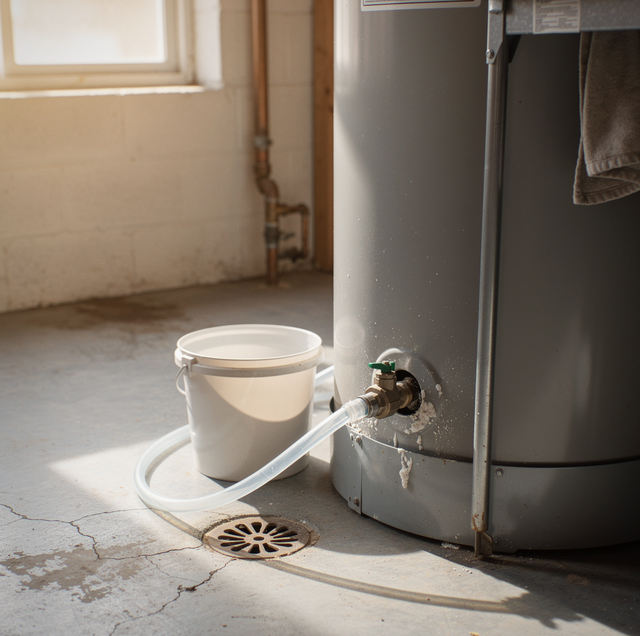
Flush the tank on a schedule. Draining and flushing the sediment out once a year restores lost volume and heat transfer, and it is the single best preventive step. If yours has never been flushed and is many years old, flushing a heavy crust can sometimes reveal a leak the sediment was masking.
The water coming out during a tank flush is scalding, so power or gas must be off and the tank given time to cool first. A weeping T&P valve is a pressure warning that should be diagnosed, never capped.
Replace a failed dip tube: A cracked or crumbled dip tube swaps out for a modern one, restoring proper cold-water delivery to the bottom.
Replace a bad element or thermostat: On an electric unit, a burned-out element or a dead thermostat is a defined part with a defined fix. This is live-voltage work inside the tank, so it belongs to a professional.
Set the thermostat to a safe temperature: Around 120°F is the standard target. It is hot enough for showers and dishes while low enough to reduce scald risk for children and older adults. Pushing the setting much higher to squeeze out more hot water trades a small gain for a real burn hazard.
Right-size or rethink the tank: If the tank is simply too small for the household, a larger tank or a tankless unit that heats on demand may be the better answer than chasing a fault that is not there.
DIY Versus Calling a Pro
A homeowner can comfortably check the thermostat setting, listen for rumbling, note whether the fade is gradual or sudden, and flush the tank if they are careful about the scalding water and shutting off power or gas first. Those steps solve or diagnose a good share of cases.
Electric element and thermostat replacement, gas burner and thermocouple work, and anything involving the T&P valve or a suspected tank leak are professional territory. The reasons are simple: live voltage, gas, high pressure, and burn risk. A weeping T&P valve in particular is a pressure warning, and the safe move is to have it diagnosed, never to cap it.
Cold months do make this worse, because the incoming water is colder and the heater has to work harder to bring each gallon up to temperature, which stretches recovery time and makes a marginal tank feel worse. The underlying tank faults, though, are there year-round. Warmer incoming water in summer can mask a thinning supply that a cold snap will expose.
Frequently Asked Questions
As a rough guide, usable hot water is often around 70 percent of the tank's rated size, because incoming cold begins mixing near the end of the draw. A 50-gallon tank delivers roughly 35 gallons of usable hot water, and a standard shower head uses about 2 gallons a minute, so figure about 15 minutes from a healthy tank before recovery has to keep up.
Yes. Hard water carries more dissolved calcium and magnesium, so it deposits sediment faster and thicker. Homes with hard water often see usable volume shrink years sooner than homes with soft water, which is why a water softener or more frequent flushing helps those heaters hold their capacity.
Indirectly. The anode rod corrodes on purpose to protect the steel tank, but when it dissolves fully, the tank lining starts corroding and can shed flakes that add to sediment and accelerate a leak. Replacing a spent anode rod is a maintenance step that extends tank life, though it will not by itself restore volume already lost to buildup.
Rusty water often means the anode rod is exhausted and the tank interior is corroding, and a rotten-egg smell usually points to a reaction between the anode and bacteria in the water. Both signal an aging tank whose capacity and reliability are declining, and both are worth a professional look before the tank fails outright.
A tankless unit will not run out the way a tank does, since it heats water on demand rather than storing it. It can, however, fall short if the flow rate demanded exceeds what the unit can heat at once, so running two showers plus a dishwasher can outpace an undersized tankless model even though it never empties a tank.
Stagger your usage so draws do not stack up: space showers about twenty minutes apart to let the tank recover, run the dishwasher and laundry at off-peak times, and shorten the longest shower in the house. Lowering flow with an efficient shower head also makes the same stored volume last longer without touching the temperature setting.
Get your fading hot water diagnosed before your next cold shower — a quick inspection finds the real cause and the right fix. Ser Plumbing repairs water heaters across the area, from water heater repair in Bellflower to Lakewood. Call (310) 953-3566.
