
Quick Answer: A bad drain smell almost always traces to one of three things: a dried-out P-trap letting sewer gas rise, biofilm and gunk coating the pipe walls, or a venting problem. The room it comes from, and whether running water clears it, tell you which one you're dealing with.
A smelly drain is your plumbing telling you something specific. The odor isn't random, and it isn't just "old pipes." Sewer gas, decaying food, bacteria feeding on soap scum, and a bad seal at a toilet base each produce a slightly different smell in a different spot, and each has a different fix. The trick is reading the clues before you pour anything down the pipe.
Below is how a plumber actually narrows it down, starting with the mechanism, then the fix.
The P-Trap: Your First Line of Defense Against Sewer Gas
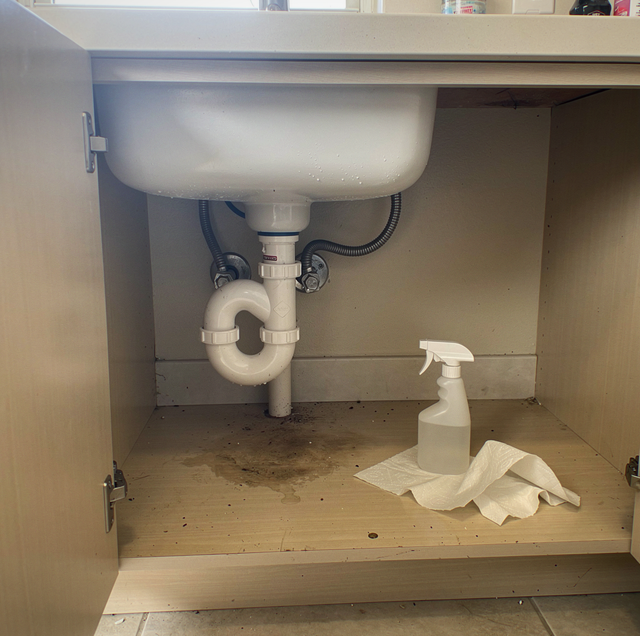
Look under any sink, and you'll see the pipe dip down into a U-shape before it heads into the wall. That U is the P-trap, and it does one job: it holds a small pool of water (usually a couple of inches deep) that physically blocks sewer gas from climbing back up the drain and into the room. Think of it like the water sitting in a toilet bowl, sealing off the pipe below. As long as that water is there, gas stays down where it belongs.
The problem shows up when the trap dries out. Water evaporates over time, and if a drain goes unused for a few weeks, the seal can disappear entirely. Now there's an open pipe running straight to the sewer, and the classic rotten-egg, outhouse smell drifts up.
This is the single most common cause of a mystery sewer smell, and it hits predictable places: a guest-bathroom sink nobody uses, a floor drain in a laundry room or garage, a basement drain, a shower in a spare bath. The tell is simple. If the smell comes from a rarely-used fixture and gets stronger over weeks of no use, it's a dry trap.
The fix costs nothing. Run water down that drain for 30 to 60 seconds to refill the trap. For a floor drain that dries fast, pour in a quart or so of water, and add a splash of mineral oil on top to slow evaporation because the oil floats and caps the water. If refilling kills the smell for a while, you've confirmed the diagnosis.
Biofilm: The Gunk That Feeds the Bacteria
When the drain gets constant use but still stinks, the culprit is usually what's coating the inside of the pipe. Grease, food, hair, soap, skin cells, and toothpaste build up on the pipe walls and on the tailpiece, the short vertical section right below the drain basket. Bacteria colonize that layer, and their waste is what you smell. This is biofilm, and it's the sticky, dark slime you'll find if you pull the pop-up stopper out of a bathroom sink.
The smell differs by room because the food source differs. In a kitchen sink, grease and food scraps break down into a musty, sour, sometimes rotten odor. In a bathroom, hair, soap scum, and skin cells feed the bacteria and produce a mustier, earthier stink. Same mechanism, different diet.
Here's the giveaway that separates biofilm from a dry trap: with biofilm, running water briefly makes the smell worse, not better, because you're disturbing the colony. The odor is also fairly constant, rather than building up only during periods of no use.
Clearing it takes physical removal, not just rinsing. Pull the stopper and scrub the buildup off it. A drain brush run down the tailpiece scrapes the walls where the slime lives. Very hot water helps flush loosened grease in a kitchen line. The key point is that you have to remove the biofilm, pouring something down that only masks the smell, leaving the colony intact to regrow.
Gurgling and Smell Together Point to the Vent
Your drain system isn't just pipes carrying water down. It's also connected to a vent stack, a pipe that runs up through the roof and lets air into the system so water can flow smoothly. When a fixture drains, the vent lets air in behind it; without that air, the draining water pulls a vacuum.
That vacuum is the problem. A blocked, cracked, or poorly designed vent (leaves, a bird's nest, or a frost cap over the roof opening are common) means that draining water siphons the water right out of nearby P-traps. The trap runs dry, and sewer gas follows. The signature clue is sound: you'll hear gurgling from a drain or toilet when another fixture empties, and you'll smell sewer gas along with it. If you refill a trap and it goes dry again on its own within a day or two, even with normal use, suspect the vent. That one usually needs a plumber, since the blockage is often up on the roof.
The Toilet Base and the Wax Ring
A toilet sits on a wax ring that seals it to the drain flange in the floor. That ring blocks sewer gas from escaping around the base. When it fails (or when the toilet rocks because the closet bolts are loose), the seal breaks, and gas seeps out at floor level.
The smell here is sewer gas, but the location is the giveaway: it's strongest near the floor around the toilet, not up at the sink or tub, and it may come with a slight water stain or softness in the flooring at the base. A toilet that wobbles when you shift your weight on it is a strong hint. Snugging the closet bolts sometimes helps, but a failed wax ring means pulling the toilet and replacing the ring, which is worth having done right so it seals cleanly.
Two Sources People Blame on the Drain That Aren't
The garbage disposal: A disposal has a rubber splash guard, those black flaps at the mouth. Food gets trapped on the underside of those flaps and on the grind ring, and it rots there while the drain itself is perfectly fine. If the smell is worst right at the sink opening and comes in a whiff when you run the disposal, lift or peel back the splash guard and scrub the underside with a brush and dish soap. That's a five-minute job that solves a smell people spend weeks chasing down the pipe.
The water heater: A rotten-egg, sulfur smell in your hot water (and only your hot water) usually isn't a drain at all. It comes from anaerobic bacteria reacting with the magnesium anode rod inside the tank, producing hydrogen sulfide gas. The tell is clear: if the sulfur smell appears when you run hot water and vanishes on cold, and it's the same at every faucet, it's the water heater, not the drain. That's a different repair path entirely, often a flush or an anode rod swap.
When the Smell Won't Go Away No Matter What
If you've refilled every trap, scrubbed the biofilm, checked the disposal, and a sewer odor still hangs over the whole house (or drifts through more than one room), the problem may be deeper. A cracked or broken sewer line, often under a slab foundation, releases gas that finds its way up through the ground and into the living space. Mold growing in a sink overflow opening can also throw a musty smell that no amount of drain cleaning touches, since the overflow channel rarely gets flushed.
A persistent, whole-house sewer smell is the one to take seriously. Much of the older housing stock runs older drain lines, clay, and cast iron that have had decades to crack, corrode, or shift as the ground moves. Those materials don't fail gently, and a line that's broken under the slab won't fix itself. That's the point of bringing in a camera inspection rather than keep guessing.
Frequently Asked Questions
Mostly, it masks the problem. Bleach kills surface bacteria for a day or two but doesn't remove the biofilm layer they live in, so the colony regrows fast. Baking soda and vinegar fizz nicely and can loosen light residue, but the reaction is weak and short-lived; it neutralizes itself within seconds and won't strip a real grease or slime coating. Physical removal with a brush is what actually lasts. If you want a rinse that helps, a kettle of boiling water down a kitchen drain does more to move grease than either home remedy.
About once every three weeks is a safe rule for a standard sink trap, and roughly every one to two weeks for a floor drain, which holds less water and sits more exposed to airflow, so it evaporates faster. In a dry-air spell or with heating or cooling running a lot, evaporation speeds up, so shorten the interval. For a drain you'll be away from for months, pour in a cup of water with a tablespoon of mineral oil floated on top, the oil layer slows evaporation and can hold the seal for the better part of a season.
At the low levels most homes see, sewer gas is mainly a nuisance and a headache-and-nausea trigger rather than an immediate hazard. But it's a mix that includes hydrogen sulfide (the rotten-egg smell) and methane. Hydrogen sulfide is toxic at higher concentrations and, unnervingly, deadens your sense of smell as levels climb, so a fading odor doesn't mean the gas is gone. Methane is odorless and flammable in enough volume. A faint whiff from one dry trap isn't an emergency; a strong, persistent smell you can't clear warrants getting the source found rather than living with it.
Two things stack up. Warmth speeds bacterial activity and evaporation, so odors are simply stronger and traps dry faster in heat. On top of that, running an air handler, exhaust fan, or clothes dryer can pull the house into slight negative pressure. The home is a sealed box, so forcing air out draws replacement air in from anywhere it can, including up through a drain with a weak trap seal. That's why an odor can appear the moment the AC kicks on. The same negative-pressure effect happens in winter when a furnace or heating fan runs, so it's not strictly a hot-weather issue. Any time air is being moved out of the house, a marginal trap gets tested.
Run the cold water alone and smell it, then run the hot alone. A water-heater problem shows up only in the hot water and appears at every faucet in the house equally, because the source is the tank feeding all of them. A drain smell is tied to a location (one sink, one floor drain) and doesn't care if you're running hot or cold, since it's coming from the pipe below the fixture, not the water itself. If plugging a sink and filling it, then releasing, changes the smell, you're dealing with the drain.
A trap problem is local and responsive: it comes from one fixture and eases when you refill or clean that drain. Suspect a broken line when the odor is whole-house or floats between rooms, doesn't respond to refilling any single trap, and lingers even when every fixture is in normal use. Damp spots on a slab floor, unusually green patches in the yard over the sewer path, or repeated backups alongside the smell point in the same direction. At that stage, a camera run through the line finds the crack or separation directly, which beats replacing wax rings and scrubbing traps one at a time, hoping the smell stops.
Track down the smell and fix it at the source instead of masking it — a proper diagnosis saves you chasing the wrong drain. Ser Plumbing repairs sewer lines across the area, from sewer line repair in Downey to Lakewood. Call (310) 953-3566.
