
What Is a P-Trap? The Bend That Guards Your Home
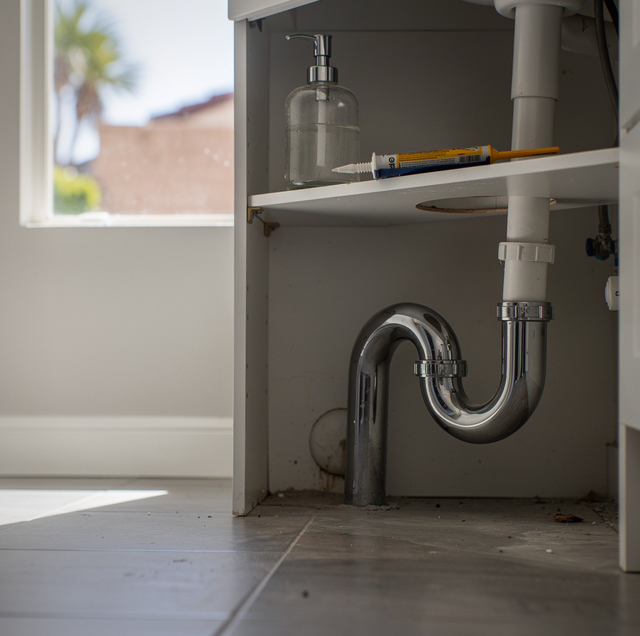
Quick Answer: A P-trap is the U-shaped bend under a drain that keeps a small plug of water sitting in the curve. That water, called the trap seal, blocks sewer gas from rising up through the drain into the room while still letting wastewater and debris flow down and out.
Look under any bathroom sink, and you will find a curved section of pipe shaped like the letter U or J. That curve is the P-trap, and it does more than make the plumbing look busy. It holds a small amount of water at all times, and that trapped water is the only thing standing between your living space and the drain system beyond it.
The Water Seal Is the Whole Point
Every fixture in your home connects to a drain system that eventually joins the main sewer line. That system carries waste, and it also carries gas. Decomposing material in the sewer produces a mix that includes methane and hydrogen sulfide, the source of that rotten-egg smell. Without a barrier, those gases would drift straight back up the pipe and into your kitchen or bathroom.
The P-trap solves this with water. After you run a faucet, a small volume of water settles into the low point of the U-bend and stays there. Because water sits across the full width of the pipe at that dip, gas coming up from the sewer side hits a liquid wall and cannot pass. Fresh waste pushed down from the fixture displaces the old water and refills the seal every time you use the drain. So the barrier renews itself without any moving parts.
This standing water is called the trap seal, and a healthy seal is usually around two inches deep from the top of the water to the bottom of the dip. That depth matters. Too shallow and the seal is easy to lose; deep enough and it holds against normal pressure swings in the system.
Where P-Traps Live in a Home
Once you know what to look for, you will start seeing traps everywhere. Under a kitchen or bathroom sink, the trap is the exposed chrome or white plastic U hanging below the drain. Tubs and showers have them too, tucked out of sight below the floor or behind an access panel. Toilets are the exception in appearance only: the trap is built into the porcelain itself, which is why the bowl always holds standing water.
Floor drains, like the one in a laundry room, garage, or basement, also have a trap underneath the grate. A washing machine standpipe has its own trap behind or below the machine. The rule is simple: if a fixture connects to the drain system, code requires a trap between it and the sewer. Every one of them is holding its own little seal of water right now.
How a Trap Goes Dry and Lets Gas In
A trap only works while it holds water, and there are a few ways that water disappears.
Evaporation in a fixture nobody uses: A guest bathroom sink, a basement floor drain, or a spare shower can sit unused for weeks. With no fresh water arriving, the seal slowly evaporates. Once the water level drops below the dip, the barrier breaks and sewer gas has an open path. This is the most common reason a rarely-touched room suddenly smells foul. Floor drains are especially prone to it because nothing routinely sends water their way.
Siphoning: When a large slug of water rushes down a drain, it can pull the trap seal along with it, leaving the U empty even though the fixture was just used. Venting is what prevents this, covered below.
Leaks and evaporation combined in a warm, dry space speed the process. A trap in a hot attic or a sun-facing wall cavity loses its seal faster than one in a cool cabinet.
If a room that gets little use develops a persistent sewer odor, a dry trap is the first suspect. A bubbling or gurgling sound from a drain points to a different problem and is worth a closer look, because it often signals a venting fault rather than a simple dry trap.
The Vent: Why the Trap Does Not Get Sucked Dry
A drain is not a sealed straw. As water falls down the pipe, it needs air behind it, the same way pouring liquid from a can goes glug-glug until you punch a second hole. In plumbing, that second hole is the vent.
Vent pipes branch off the drain line and run up through the roof, letting air into the system. When you empty a full tub, the vent feeds air in behind the rushing water so the falling water does not create suction on the trap. Without a vent, that suction would grab the trap seal and drag it down the drain, leaving the U empty and open to gas. So a working vent is what lets a trap survive heavy flow and keep its water.
Consider a soda straw with your finger over the top: the liquid stays put because no air can get in. Lift your finger, and it drains freely. A vent keeps a permanent finger-off condition on your drains so the traps below never get siphoned.
Vent trouble often announces itself with sound. Gurgling from a drain, or one fixture bubbling when you use another, usually means air is being pulled through a trap because the vent is not doing its job. That is a signal to call a plumber rather than ignore, since a venting fault can dry traps repeatedly and let gas in no matter how often you run the water.
S-Traps and Why They Fell Out of Favor
Older homes sometimes have an S-trap instead of a P-trap. The names describe the shape: a P-trap dips down and then turns horizontally toward a vented wall connection, while an S-trap dips down and curves right back downward toward the floor.
That downward exit is the flaw. Because an S-trap sends water straight down after the bend, a full basin draining through it acts like a self-siphon, pulling its own seal out behind the water with no vent to break the suction. The trap empties itself in normal use and lets sewer gas back in. Modern plumbing practice moved away from S-traps in favor of properly vented P-traps for exactly this reason. If you find an S-trap under a sink, it is worth having a plumber look at correcting it.
Common Problems With P-Traps
The trap sits at a low point and gets used constantly, so a few issues show up regularly.
Clogs collecting in the bend: The U is the natural place for heavy debris to settle. Grease, hair, food scraps, and a surprising number of lost rings and earrings end up sitting in the curve. A slow drain that clears when you clean the trap points to buildup right there.
Leaks at the slip nuts: The trap connects with slip nuts and washers that thread on by hand and a light turn. Over time, a washer can shift or harden and start dripping at the joint. These are meant to seal by compression, not brute force, so overtightening a plastic slip nut can crack it and make the leak worse.
A missing or improper trap: A DIY installation or a hasty repair sometimes leaves a fixture with no trap, or with a flexible ribbed hose bent into a fake trap shape that collects debris and does not hold a reliable seal. Either way, the result is the same: sewer gas and odor with nothing to stop it.
Simple Checks a Homeowner Can Do
If a seldom-used sink, shower, or floor drain starts to smell, pour a couple of cups of water down it to refill a dry trap. Adding a small splash of cooking oil on top of a floor-drain seal slows future evaporation, since oil floats and reduces the water surface exposed to air.
For a leak, look at the slip nuts first and snug them gently by hand. If the drip continues, or if a sewer smell keeps returning even after you refill the trap, the cause is likely deeper: a cracked trap, a hidden clog, or a venting fault. Persistent sewer gas is not just unpleasant, since the mix can include hazardous components, so a smell that will not clear is a reason to bring in a professional rather than keep chasing it.
Frequently Asked Questions
Yes, and both cause problems. The vertical pipe between the fixture drain and the top of the trap, called the trap arm tailpiece, should stay short. When a trap hangs too far below the drain outlet, the long fall lets water build enough speed to siphon the seal. Plumbing standards generally cap the drop from the fixture to the trap weir at about 24 inches for this reason. A trap set too high can leave standing water in the fixture instead.
In many commercial and some residential settings, yes. A trap primer is a small valve that automatically feeds a trickle of water to a floor drain that would otherwise sit unused and evaporate dry. It taps into a nearby supply line and releases a measured amount periodically. For a home floor drain, manually pouring water in monthly usually does the same job without added hardware.
The toilet's trap is a wide, deep passage molded into the porcelain and refilled directly by the tank on every flush, so its seal is refreshed with a large, controlled volume each time. A sink trap holds far less water and depends on whatever you happen to run through it, so it dries out during long stretches of no use while a regularly flushed toilet almost never does.
Not quite. A bottle trap is a compact canister-shaped trap common under pedestal and wall-hung sinks where space is tight. It holds a water seal like a P-trap but uses a vertical chamber instead of a U-bend. It works, though the narrower internal passage tends to clog more readily than a standard trap and can be harder to clear.
It is a poor idea and often not allowed. The ribbed inner wall of a corrugated flex pipe catches debris and builds clogs far faster than smooth trap tubing, and bending one into a U rarely holds a consistent seal depth. Smooth-wall traps in rigid PVC or ABS are the reliable choice.
The trap weir is the top edge of the outlet side of the U, the level where water spills over and out toward the drain line. It sets how deep the standing seal can be, since water above the weir simply drains away. A trap seal below roughly two inches at the weir is considered too shallow to reliably block gas, which is why a properly sized trap keeps that dimension in a set range.
Track down a stubborn drain odor before it spreads — a quick trap and vent check settles it fast. Ser Plumbing clears drains across the area, from drain cleaning in Long Beach to Norwalk. Call (310) 953-3566.
