
What Causes Pipes to Knock or Bang? The Real Culprits
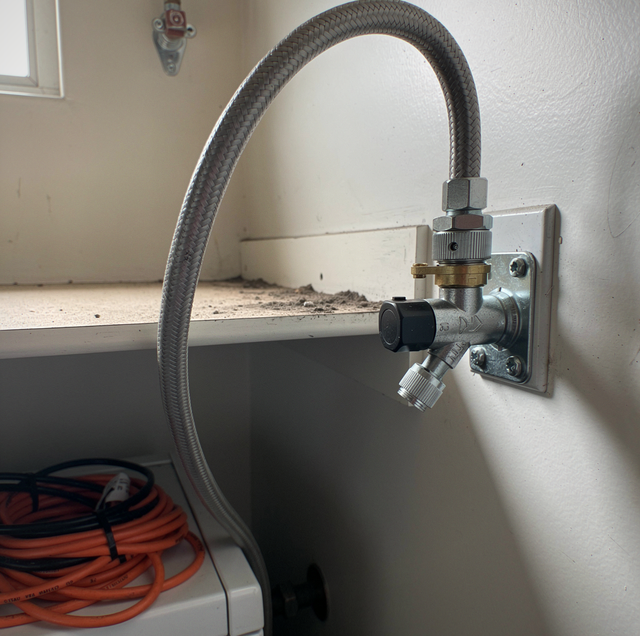
A pipe doesn't knock without a reason, and the type of sound is usually the clearest clue to what that reason is. A sharp bang isn't caused by the same thing as a soft, slow tick, and chasing the wrong fix because the two got lumped together as "the pipes acting up" wastes a service call on a problem that was never actually there.
Match the Sound to the Cause
| What You Hear | When It Happens | Likely Cause | How Urgent |
|---|---|---|---|
| One sharp bang | Right when a valve or appliance shuts off | Water hammer (pressure shockwave) | Address within weeks; joints take cumulative stress |
| Rapid series of bangs | Washing machine or dishwasher cycling | Water hammer at a solenoid valve | Same as above |
| Soft, slow ticking | Starts a minute after hot water runs, fades as it cools | Thermal expansion of the pipe against framing | Low; usually just needs a cushioned strap |
| Rattling or fluttering | Continuous while a valve is partly open | Worn washer inside an old gate or globe valve | Moderate; valve is wearing out |
| Groaning or shuddering | Whenever any fixture is used, pressure feels high | Excess static water pressure | Address soon; stresses the whole system |
| Repeated banging that's gotten louder over months | Same trigger fixture each time | Waterlogged air chamber or missing arrestor | Address before a joint works loose |
What Water Hammer Actually Is
Water flowing through a supply line at full flow has real momentum, much like a rolling cart that keeps moving until something stops it. A standard solenoid valve inside a washing machine or dishwasher can go from fully open to fully shut in a fraction of a second, engineered that way so the appliance can meter water precisely. That abrupt stop gives the moving water nowhere to go. Its momentum converts instantly into a pressure spike that travels back through the pipe at several hundred feet per second, and when that spike reaches a bend, a valve, or a section of pipe loosely secured to framing, the pipe jerks and knocks against whatever it's near. That knock is the bang you hear, and it's mechanical, not electrical or structural.
The harder question is why some homes barely notice it and others shake with every load of laundry. Static water pressure sets the baseline force behind every spike; a home running higher pressure turns an ordinary valve closure into a harder hit. Pipe material also plays a role, since rigid metal transmits the shock more readily than a flexible line. And a pipe that's loosely strapped has room to physically move when the spike arrives, turning an internal pressure event into an audible knock against a stud or joist.
Why Certain Fixtures Trigger It, and Others Don't
Appliances with electrically actuated valves are the most consistent source because those valves are designed to close quickly for precise water metering rather than gradually, as a hand-turned faucet does. A washing machine, dishwasher, and ice maker all use this type of valve, and any one of them can produce the bang the instant it finishes its fill cycle. Quarter-turn ball valves used as fixture shutoffs behave similarly when closed quickly, going from full flow to none in one motion.
Older-style compression faucets with a rubber washer that seats gradually against a valve seat rarely cause hammer, since the flow tapers off over a second or two instead of stopping instantly. That's a useful diagnostic on its own: if the bang lines up with an appliance cycling rather than with someone using a faucet, the appliance's valve is almost certainly the trigger.
Thermal Expansion Ticking Is a Different Noise Entirely
A slow, quiet ticking that begins shortly after hot water starts running, and tapers off once the pipe reaches a steady temperature, isn't hammer at all. Copper and CPVC pipe both expand slightly as they heat, and that expansion lets the pipe slide a fraction of an inch against a framing member it passes through, producing a soft tick rather than a bang. It follows the water temperature curve, not the instant a valve closes, which is the clearest way to tell the two apart. The usual fix is far simpler than anything hammer needs: a felt-lined or plastic-sleeved strap where the pipe crosses framing gives it room to expand without scraping bare wood.
The Fixes That Actually Address Hammer
Water-Hammer Arrestors: An arrestor is a small sealed device, usually threaded directly onto the supply line at the fixture or appliance causing the noise, containing a spring-loaded piston or a sealed air charge behind a diaphragm. When the pressure spike arrives, that cushion compresses and absorbs the shock instead of letting it slam a closed valve. Because the air chamber is sealed off from the water itself, it doesn't waterlog and lose effectiveness the way an open air chamber does over the years. A plumber sizes the arrestor to the branch line's flow demand, since an undersized unit on a heavily used line won't fully absorb a strong spike.
Recharging Open Air Chambers: Many older homes were plumbed with air chambers, capped vertical pipe stubs near fixtures meant to trap a cushion of air. Over years, that trapped air slowly dissolves into the water until the chamber is waterlogged and useless. Shutting off the main supply, opening the highest and lowest faucets in the house to drain the lines completely, then closing everything and restoring the main lets air refill those chambers, restoring the cushion, at least until it dissolves again over the following year or two.
A Pressure-Reducing Valve: If static pressure at an outdoor spigot reads above roughly 80 psi, every valve closure in the house is landing harder than it needs to. A pressure-reducing valve installed on the main line steps the incoming pressure down to a safer range, softening the force behind every hammer event and reducing wear on fixtures, supply hoses, and the water heater's connections.
Properly Secured Pipe Strapping: Loose or missing straps don't create the shockwave, but they allow the pipe to move when one arrives, turning an internal pressure spike into a loud knock against the framing. Cushioned straps, wrapped in felt or rubber rather than bare metal clamps, hold the pipe snugly without letting it ring against a joist when a spike slips through.
A Cause That Gets Missed: A Worn Valve Washer
Not every rattle traces back to a shockwave. An old gate valve or globe-style shutoff with a worn rubber washer can flutter or chatter as water passes through a partially open position, producing a buzzing or rattling sound unrelated to a sudden stop. This shows up as a continuous noise while the valve is in use, rather than a single bang right when flow stops. The fix is to replace the worn valve rather than install an arrestor, since an arrestor does nothing for a valve that's simply worn out internally.
Left alone, a knocking pipe does more than annoy. Each shockwave puts real mechanical stress on threaded joints, soldered fittings, and valve connections, and while one bang won't crack anything, thousands of repetitions over months work fittings loose and wear valve seats until a joint that was fine when the noise started finally starts to weep. Matching the sound to its actual cause, rather than assuming every knock is the same problem, is what gets it fixed instead of just muffled.
Frequently Asked Questions
Yes. Repeated shockwaves reaching the water heater's connections can fatigue the temperature-pressure relief valve's internal seal over time, causing it to weep slightly or fail to reseat fully after opening once, which is a separate failure path from the valve simply wearing out on its own.
It can. A long, straight run of rigid pipe carries and amplifies a pressure spike more than a shorter run with several bends and elbows, since each bend dissipates a portion of the shockwave's energy as it travels, which is why the same trigger valve can sound louder in one house than another with a shorter branch line.
Generally, yes. Rigid copper transmits both the pressure spike and the resulting knock against framing more audibly than flexible PEX tubing, which has enough give to absorb part of the impact. That difference is why some homes notice hammering quiet down noticeably after a partial repipe from copper to PEX, even when no arrestor was installed as part of the work. It's worth installing one anyway: PEX absorbing the sound doesn't mean it's absorbing the pressure spike itself, and the fitting connections at each end of a PEX run still take the same mechanical stress a copper joint would.
A single event essentially never bursts a sound section of pipe. The real risk shows up where a section already has hidden corrosion, a hairline crack, or a weakened joint; a strong enough spike hitting that already-compromised spot can be the push that turns a slow, undetected weep into an active leak.
A plumber traces the branch back from the fixture or appliance that triggers the noise, using the appliance's own shutoff valve as a reference point, and confirms the exact path with a pipe locator when the run isn't obvious from the layout, rather than opening drywall to search by guesswork.
Yes. A PRV's internal diaphragm and spring can wear or drift out of calibration after several years of use, so a periodic pressure check at an outdoor spigot confirms it's still holding within the target range rather than assuming a valve set once will continue holding forever.
Get the shockwave silenced at its source with an arrestor, recharge, or pressure fix — no more guessing at the bang. Ser Plumbing serves Paramount, Bellflower, Lakewood. Call (310) 953-3566.
