
Ring Down the Drain? What You Do Next Decides Everything
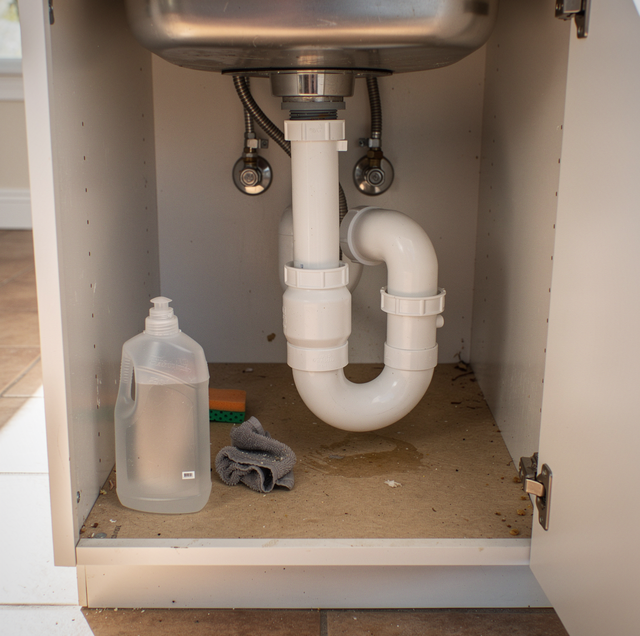
If a ring just went down the sink, the next few minutes matter more than anything you do afterward. In almost every case, the ring has not gone far. It is sitting in the curved section of pipe under the cabinet, held there by a small pool of standing water, and it will likely stay exactly there if the fixture is left alone. What happens between now and when someone opens that pipe determines whether the ring comes back.
Stop the Water and Stop Using the Fixture
The single most useful thing to do right now is also the simplest: shut off the water at that sink and stop using it. That means no more running the faucet to "flush it further down" for a look, no washing hands in that bowl, and no letting a housemate rinse a dish in it. Every gallon that moves through the drain after the ring is more water pressure working to carry it deeper into the pipe.
Both bowls count: If it is a double-bowl kitchen sink, the two bowls typically join into a single trap via a shared waste connection before the water reaches the wall. Running the other bowl, or a dishwasher that discharges through the same line, sends water past the exact spot where the ring is sitting.
Close the sink's angle stops under the cabinet, not just the faucet handle, if anyone else in the house might turn that faucet back on before a plumber arrives. It removes the temptation entirely.
Where the Ring Actually Is Right Now
Every sink drain routes through a P-trap: a U-shaped bend of pipe mounted just below the tailpiece that hangs down from the sink drain. The trap's job is to hold a permanent plug of standing water that blocks sewer gas from coming back up through the fixture. That same standing water is why a dense object almost never makes it past the trap on its own. A ring is heavier than the water around it, so it sinks to the bottom of the U and stays there, held by gravity and the still water, rather than getting carried along by whatever thin flow passes over it afterward.
This is also why panic about the ring being "gone into the wall" is usually misplaced. The trap sits well before the wall, attached to the tailpiece by a slip nut and washer on one side and to a horizontal trap arm on the other. Unless the drain was actively running hard when the ring fell, or someone ran water afterward to help, the ring is sitting at that low point of the U, not farther along the line.
What Turns a Recoverable Ring Into a Lost One
Three reactions, all of them instinctive, are the ones that actually cause the loss:
Running the disposal: If the ring is anywhere near the disposal side of a divided sink, switching the unit on puts a spinning grind plate directly in its path.
Plunging the drain: A plunger drives the column of water standing in the trap back and forth, hard, in both directions. That is exactly the force that moves a settled object — over the far side of the U on the push, or back up toward the strainer on the pull — and once it has moved, nobody knows which.
Pouring in a drain chemical: It does nothing to free a solid ring, and caustic cleaner sitting on top of a stone setting or a plated finish is not something to introduce while the piece is still down there. And if any has already gone in, say so before anyone opens that trap, since it is still sitting in the same standing water as the ring.
Any one of these three actions turns a recoverable item into a lost one, which is why it is best to stop using the fixture entirely rather than try something first and call for help if it does not work.
If the Sink Has a Garbage Disposal
A divided kitchen sink with a disposal changes the caution needed, not the plan. The disposal's grind chamber sits directly beneath one bowl, with its own inlet, flywheel, and grind ring, and a ring that fell down that side is close to it. The correct response is to leave the wall switch off and, if there is any doubt that a housemate has flipped it back on, shut the unit off at the breaker instead.
Never reach into a disposal's grind chamber; leave retrieval to a plumber. A disposal switch can be wired through the outlet the unit plugs into, so a switch that appears off does not prove the unit is de-energized. Use the breaker.
What a Plumber Does to Get It Back
The work itself is fairly contained. A plumber typically closes the angle stops feeding that fixture if they are not already off, sets a bucket directly under the trap to catch what is inside it, and loosens the slip nuts that hold the trap to the tailpiece on one side and the trap arm on the other. Those connections come apart cleanly when they were assembled correctly and have not corroded in place. Once the trap is free, its contents- water, hair, whatever settled with the ring get strained out and checked. On an older galvanized or steel setup, rather than the more common plastic tailpiece and trap, that same disconnection can require more effort and care to avoid cracking a fitting that has not been touched in years.
Reassembly matters as much as removal: The trap goes back on with new washers where the old ones are compressed or cracked, and the connections get checked for drips before anyone calls the job done.
If It Is Already Past the Trap
Sometimes the ring has already moved beyond the trap before anyone reads a page like this one, usually because water kept running for a while before anyone noticed it was gone. Past the trap, the pipe becomes the trap arm, then ties into the branch line through a sanitary tee; from there, the honest picture changes. Recovery is no longer a matter of removing one connection and looking inside. It can mean opening a cleanout further down the line, or running a small camera through the pipe to locate the item before anything is disassembled, and even then there is no guarantee it turns up in a spot that can be reached without more extensive work. Nobody can promise a ring will be found once it is past that first bend, which is exactly why the first few minutes, before it gets that far, matter as much as they do.
Frequently Asked Questions
Only if the ring is a magnetic metal, and most rings are not. Gold, silver, and platinum are not magnetic, so a magnet dropped down the drain will not attract them; magnetic retrieval tools only help with steel items, such as a dropped screw or bobby pin.
Plain metal bands are not harmed by sitting in trap water for a while. A setting with a glued or porous stone, such as an opal or a pearl, is the exception, since prolonged soaking can loosen the adhesive or affect the stone itself, which is a reason to move faster on those pieces specifically.
It is worth checking the stopper assembly itself before assuming the ring reached the trap. A pop-up stopper is attached to a pivot rod under the sink that can be lifted out by hand, and a ring sometimes catches on the stopper's crossbar rather than falling all the way past it.
It usually makes the job faster. A pedestal bathroom sink often has a decorative chrome trap in plain view rather than one hidden in a cabinet, and those traps commonly use knurled slip nuts that loosen by hand instead of the wrench-only nuts on a concealed plastic trap.
It depends on the foundation. In a home built on a raised foundation, a cleanout is often accessible under the house near the branch line; on a slab foundation, the nearest cleanout may be outside at the foundation wall or in the yard rather than anywhere near the sink itself.
Yes, and it takes seconds. A kitchen basket strainer is a removable cup sitting loose in its flange, not a sealed part, so a ring can sit in the basket or in the gap between the basket and the flange without ever reaching the tailpiece. Lift the basket straight out and look before assuming the ring got any further than the sink bowl.
Contact a plumber before the trap gets disturbed — freeing the slip nuts the right way keeps the ring recoverable and the connections intact. Ser Plumbing serves Paramount, Bellflower, and Lakewood. Call (310) 953-3566.
