
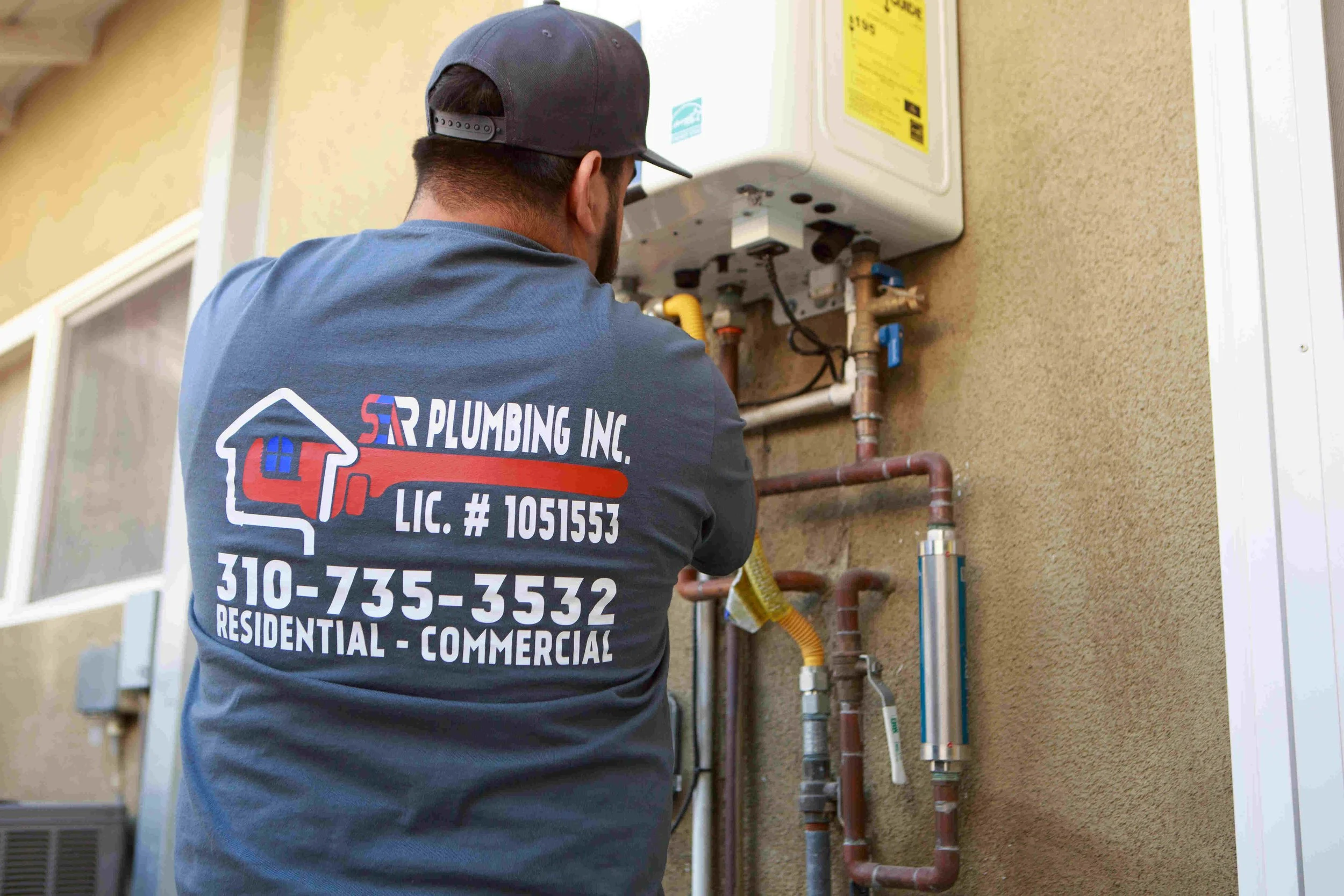
What to do in the first minutes of a plumbing emergency: stop the water, make the house safe, and know what to tell the plumber when you call.
When things go wrong with the plumbing, they can go wrong fast. The first minutes decide how much damage the water does, so here is what to do, in order, before help arrives. If these steps do not stop it, call for emergency plumbing: emergency calls are answered around the clock and dispatched by severity, subject to technician availability.
Shut Off the Water
Every home has a main valve that controls the water flowing into the house. Before damage can be assessed or leaks identified, turn off the water. For a single fixture, the valves sit under sinks and behind toilets. For anything bigger, close the main shutoff, which is usually at the front hose bib, in the garage, or at the meter box near the curb. If water is near outlets or the electrical panel, stay clear and do not touch the panel. Switch off a circuit only if you can reach the breaker from dry ground.
Turn Off the Water Heater
If the water heater is completely drained of water after the supply line is closed, the heater runs the risk of overheating and being badly damaged. Always ensure that the water heater is turned off directly after the supply. If the tank itself is leaking, close the cold water valve on top of the unit and call.
If You Smell Gas
If you smell gas, leave the home now. Do not flip switches, light anything, or start a vehicle in an attached garage on the way out. From outside, call SoCalGas at (800) 427-2200 so the utility can shut off the gas and make the area safe; in Long Beach, call Long Beach Utilities' gas emergency line instead. Then call us for the licensed gas line repair. Our guide on what to do if you smell gas walks through it step by step.
Protect People, Then Valuables
If a plumbing problem is severe and parts of the building are in danger, evacuate everyone to safety. Valuables are next. If any are at risk of water damage, move valuables before the situation worsens if it’s safe to do so.
Drain the Lines
If a pipe has burst, shutting off the water supply won’t remove the water still left in the pipes. Open faucets to relieve the pressure and drain what remains in the lines. Once the water is off, the fix itself is burst pipe repair.
Sewage on the Floor
If a toilet or drain has overflowed sewage onto the floor, stop running water in the house entirely: no flushes, no laundry, no dishwasher, because every gallon sent down comes back up. Keep people and pets clear of the affected area; sewage is a health hazard, not just a mess. Wash your hands thoroughly after any cleanup. Our guide to sewage backing up into the house explains why it happens, and clearing or repairing the line is sewer service work.
Catch Leaks
To prevent further water damage, place buckets, pots, and bowls under leaks to collect any remaining water in the plumbing system.
Is It an Emergency or Can It Wait?
Treat it as an emergency when there is uncontrolled water you cannot shut off, sewage backing up into the home, any gas smell, no water service at all, or a leaking water heater tank. Water under the sink that stops when you close the valve, or a dripping fixture, can usually wait: close its shutoff and book a regular visit. If you are not sure, call and describe what is happening. If it can safely wait for morning, we will tell you that on the phone and save you the after hours rate.
When You Call
Once the danger is stopped, call. Time is essential when preventing further damage, so keep a plumber’s number where you can find it. When you call, describe the particulars of the emergency:
Where the problem was first noticed
When it started happening
The damage of the emergency so far
Any steps you’ve taken to resolve the issue
Emergency calls are answered around the clock and dispatched by severity, subject to technician availability, and you get a realistic arrival window when you call. After hours rates are quoted before anyone is dispatched. On site, we stop the damage first, then diagnose, and give you a written number before repair work begins. Drying out the house and water damage restoration are a restoration contractor's work; we sequence with them so the repair and the drying schedule do not collide.
Frequently Asked Questions
What should I do first in a plumbing emergency?
Stop the water. Close the fixture valve under the sink or behind the toilet, or the main shutoff if the leak is bigger than one fixture. Then keep people clear of the water, stay away from the electrical panel if water is near it, and open a couple of faucets to relieve pressure. If you smell gas, skip all of that: leave the home and call the gas company from outside.
Where is my main water shutoff valve?
It is usually at the front hose bib, in the garage, or at the meter box near the curb. Find it and try it before you need it, because an emergency is the wrong time to learn where it is or that it will not turn. The valves for a single sink or toilet sit under the sink and behind the toilet.
Should I turn off the water heater when I shut off the water?
Yes. Turn it off once the supply is closed, because a tank that drains with the heat still on can overheat and be damaged. If the tank itself is leaking, close the cold water valve on top of the unit and call; a leaking water heater tank is one of the situations we treat as an emergency.
What should I do if I smell gas?
Leave the home now, without flipping switches, lighting anything, or starting a vehicle in an attached garage. From outside, call SoCalGas at (800) 427-2200 so the utility can make the area safe; in Long Beach, call Long Beach Utilities' gas emergency line instead. Once the utility has made it safe, call us for the licensed gas line repair.
What counts as a plumbing emergency?
Uncontrolled water you cannot shut off, sewage backing up into the home, any gas smell, no water service at all, and a leaking water heater tank. A running toilet or a dripping faucet is not: close the fixture's shutoff and book a regular visit. If you are not sure, call and describe it, and we will tell you on the phone whether it can safely wait for morning.
Will a plumber handle water damage cleanup?
The plumber's job is to stop the water and repair what failed: on site we stop the damage first, then diagnose. Drying out the house and water damage restoration belong to a restoration or mitigation contractor. We document the repair with photos for your insurance claim and sequence our work with the mitigation team, so the repair and the drying schedule cooperate instead of colliding.
Emergency plumbing runs from our owner operated shop at 7530 Alondra Blvd Suite F in Paramount. Call (310) 953-3566 at any hour; most calls are answered by Luis himself, and a texted photo of the problem helps us arrive ready.