
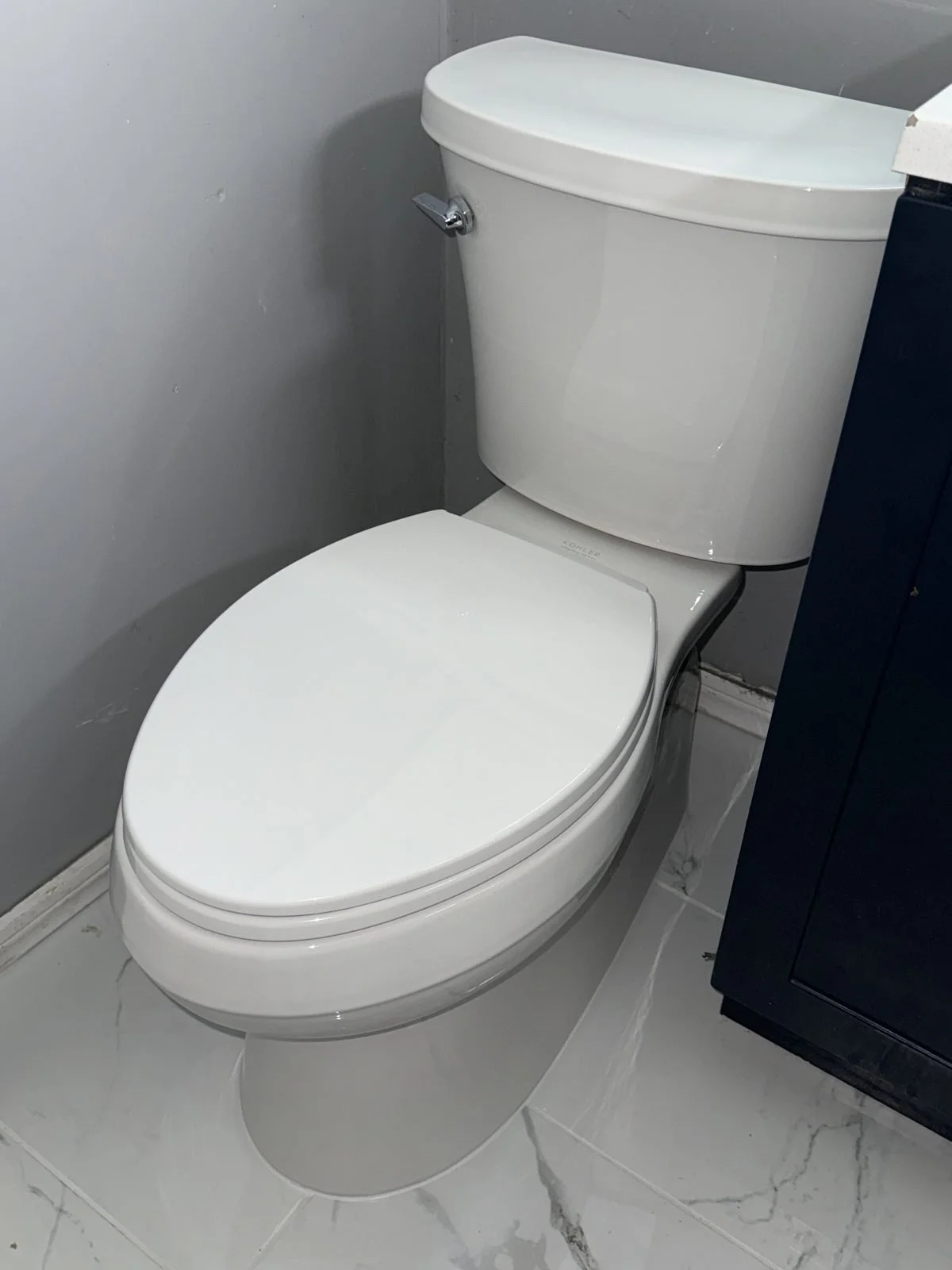
The flush ends, but the tank never goes quiet. Maybe you hear a faint hiss, maybe the toilet refills on its own every few minutes, or maybe the water in the bowl keeps wrinkling as if something is dripping into it. A toilet that will not stop running wastes water around the clock, and the parts responsible almost all sit inside the tank, where you can see them by lifting the lid. Once you know what each part does, the search for the fault gets short.
What's Happening Inside the Tank
A toilet tank runs on a repeating cycle. When you push the handle, a rubber flapper at the bottom lifts and lets the stored water rush down through the flush valve into the bowl. The flapper then drops back onto the flush-valve seat to close the opening, and the fill valve opens to refill the tank. A float rises with the water and, at the right level, tells the fill valve to shut off. The toilet keeps running whenever one of those steps fails to seal or shut off on time, so water keeps moving after the cycle should have ended. Most running toilets trace back to the flapper, the fill valve, or the float, and knowing those three narrows the hunt fast.
The Most Common Cause: A Worn Flapper
The flapper is the part that fails most often. It is a soft rubber disc, and years of sitting in tank water leave it warped, stiff, or crusted with mineral scale. When it no longer drops flat onto the flush-valve seat, water slips past it and trickles down into the bowl. That slow loss lowers the tank level, the fill valve senses the drop and kicks on to top it back up, and you get the periodic refill or the steady trickle you hear. This is the classic running toilet, and it is usually the first thing to rule out.
A new flapper costs little and installs in minutes without tools. Before you swap it, run a finger around the flush-valve seat, the plastic or brass rim the flapper lands on. Grit or a hard scale ridge on that seat will hold the new flapper open just as the old one was, so wipe it clean until it feels smooth. If the seat is pitted or rough, a repair kit or seat sleeve restores a clean sealing surface.
| What You Notice | Likely Cause |
|---|---|
| Periodic refill on its own, color test seeps to the bowl | Worn or scaled flapper |
| Constant trickle, water spilling into the overflow tube | The float is set too high |
| The fill valve never fully shuts off | Failing fill valve |
| Flapper hangs open or will not drop flat | Chain too short, too long, or tangled |
The Other Usual Suspects
When the flapper checks out, the float and the fill valve are the next places to look.
The float rides on the water and tells the fill valve when the tank is full. Set too high, it lets the tank fill past the top of the central overflow tube, and the extra water pours straight down that tube into the bowl and runs without stopping. On a ballcock-style toilet, you gently bend or adjust the float arm downward; on a modern cup-style fill valve, you pinch the clip and slide the float lower on its rod. Set the shutoff so the water rests below the top of the overflow tube.
The fill valve itself can wear out. If its internal seal is worn, it never closes all the way, so it keeps feeding water no matter where the float sits. A fill valve is replaced as a single unit and is a common part swap once you confirm the float is not the issue. A tangled or wrong-length lift chain is the last quick check: too short, and it holds the flapper off its seat, too long, and it slips under the flapper so it cannot land flat. A small adjustment or a fresh chain settles that in a minute.
When to Bring in a Plumber
Most of these fixes are within reach for a homeowner with a few minutes and a replacement part. Bring in a plumber when you have checked the flapper, the seat, the float, and the fill valve, and the toilet still runs, when the tank cracks or the flush valve leaks at its base, or when the shutoff under the toilet weeps or will not close, so you cannot work on the tank safely. A running toilet wastes water every minute it runs, so a stubborn fault that resists the simple checks is worth a professional look rather than weeks of trial and error.
Frequently Asked Questions
A running toilet leaks continuously rather than in the brief bursts a normal flush uses, so it moves far more water in a day than the fixture was meant to. A slow flapper seep runs quietly, while a fill valve stuck open runs a steady stream down the overflow tube around the clock. Because the meter counts every drop, the first sign for many households is a water bill that climbs for no clear reason. If usage jumps and a toilet is the only thing acting up, look in the tank.
Yes, and it halts the waste. Behind the toilet, on the pipe feeding the tank, is the supply stop, a small oval or football-shaped handle. Turn it clockwise until it stops to cut water to that toilet only, leaving the rest of the house running. If the tank still holds water, flush once to empty it, then work dry. Turn stops gently: a valve that has not moved in years can seize or weep at the packing nut, so if it resists or drips, leave it for a plumber.
A flapper leak is intermittent: the toilet sits silent, then wakes and runs a few seconds to top off, then goes quiet again, what people call a phantom refill. A fill valve that never closes makes a constant hiss or trickle that does not stop, because water keeps feeding in and draining out the overflow tube in a steady loop. Intermittent bursts point to the flapper and its seat; an unbroken hiss points to the fill valve.
Hard water leaves a rough mineral ridge on the flush-valve seat that a wipe will not remove. Shut off the supply, empty the tank, and scrub the seat with a nylon scouring pad or fine wet-dry paper until it feels smooth. Avoid a metal blade, which can gouge the plastic and worsen the leak. When the seat is cracked, chipped, or worn so thin that no scrubbing gives a flat surface, the flush valve itself must be replaced, which means pulling the tank off the bowl to reach the mounting nut.
The two designs are adjusted in different spots. The old ball-and-arm style uses a long horizontal rod with a floating ball; you raise or lower the level by bending that brass rod or turning a screw at the valve. The modern cup style has a float collar that slides up and down the vertical valve body itself, moved by a thumb-screw or pinch clip on a stalk beside it. Set it so the tank stops about an inch below the top of the overflow tube. People often hunt for an arm to bend on a cup valve when the adjustment is on the collar on the shaft.
If the parts seal correctly yet water pools on the floor, suspect the tank-to-bowl connection: the large rubber gasket and the bolts joining tank to bowl can loosen or perish, so water weeps from that seam every time you flush. Condensation on a humid day can also drip off a cold tank and mimic a leak, so wipe the tank dry and watch where water returns. A hairline crack in the porcelain, often below the water line or near a bolt hole, seeps slowly and shows up as a damp towel under the tank. Any porcelain crack is not a repair; that fixture needs replacing before it spreads.
Quieting a Toilet That Keeps Running
A toilet that never stops running is nearly always a tank part that fails to seal or shut off, most often a worn or scaled flapper, sometimes a float set too high, or a fill valve that no longer closes. Work through the parts in order, since each one gives a clear sign: the food-coloring test flags the flapper, water in the overflow tube flags the float, and a valve that runs with the float dropped flags the fill valve. Hard water speeds all of it along, so if you have replaced these parts before, expect the scale to return and plan to check the flapper and seat again down the line.
If your toilet keeps running after you've checked the basics, we can find the fault and stop the waste. Ser Plumbing flushes water heaters across the area, from water heater flush in Bellflower to Lakewood. Call (310) 953-3566.