
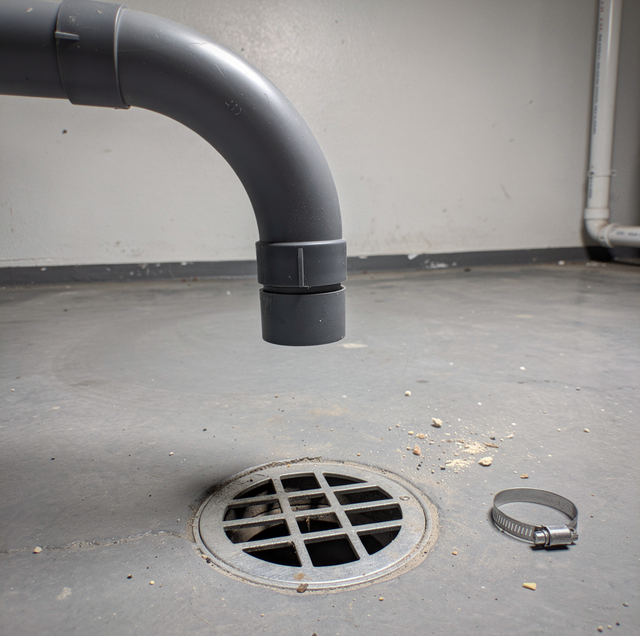
A water softener needs a drain connection with an air gap, but not always a drain of its own: a floor drain, a laundry standpipe, or a utility sink can take its discharge, and a dedicated standpipe goes in only when none of those sits within reach. The drain is there because the control valve does two jobs. It softens water on its way to the house, and it runs a recharge cycle that flushes used, mineral-heavy water out of the tank. Where that discharge lands, and whether it crosses open air on the way, are plumbing decisions made before the unit is set in place.
Which destination fits depends on the drains already near the unit and what each one asks of the connection.
| Drain Option | How It Connects | What It Needs |
|---|---|---|
| Floor drain | The discharge tube runs to a nearby floor drain and ends above the grate rather than inside the opening | Open air between the tube end and the grate, and a route from the valve that stays clear of foot traffic |
| Laundry standpipe | The tube is secured inside the standpipe's open top, above the water line, so the discharge crosses an air gap before the washer's trap | A standpipe opening wide enough to take the tube without the tube sealing it |
| Utility sink | The tube hooks over the sink rim and discharges into the basin | The tube secured well above the sink's flood-rim level so it can't slip under standing water mid-cycle |
| Dedicated standpipe | A standpipe installed for the softener alone, with the tube held above its open top | Its own trap and vent, kept independent of any other fixture's drain |
Why a Softener Drains at All
Inside the tank, resin beads carry a coating of sodium ions, and as household water moves through the bed, calcium and magnesium replace that sodium. That's the softening. Over time, the beads run out of sodium to trade, and the control valve runs a recharge: it draws in a brine solution from a separate salt tank, flushes the resin bed clean of the hardness minerals it's been holding, and rinses the whole bed before returning it to service. Every part of that flush, the backwash, the brine draw and the rinse, sends water out through a drain line rather than out to a tap.
The valve starts that recharge in one of two ways. A timer-initiated valve runs it on a set calendar schedule whether or not the resin needs it. A metered, demand-initiated valve counts the gallons passing through and calls for a recharge once the programmed volume has gone by. Either way, the water leaving the tank during the flush is why the drain connection exists, separate from anything the softener sends to the rest of the house.
The salt tank has a second, separate reason to reach a drain. A float valve inside it limits how much water fills the tank to make brine, and if that float sticks open, an overflow fitting set below the tank's rim carries the excess away instead of letting it spill onto the floor. That overflow runs as its own gravity line, below the overflow fitting and never joined to the valve's drain tube, and it can end at the same floor drain or standpipe through its own air gap. Nothing pushes water through it. It works only while every foot of the line sits lower than the fitting it leaves.
The Air Gap and Why It Matters
The end of a softener's drain tube is not meant to sit inside the pipe or fitting it discharges into. It's held above the opening, with open room air between the tube and whatever it's draining into. That physical break is the sole safeguard: if the downstream drain line ever backs up, there's no sealed connection for that water to flow back into the softener's internal plumbing. A dishwasher's drain line relies on the same physical break for the same reason.
The accepted form of the gap can vary from one jurisdiction to the next, and a licensed plumber checks which form your house requires when the connection is set. A tidy-looking install where the tube end vanishes from view gives up the break the whole arrangement depends on.
Drain water siphoned back through a sealed connection can reach the softener's resin and, from there, the drinking water throughout the house. Leave a tube pushed down into a drain pipe alone and have a licensed plumber reset the gap.
Where the Drain Line Can Go
A floor drain near the unit takes the discharge with a short tube that ends above the grate. A laundry standpipe already plumbed for a washing machine can take it too. The softener is not a trapped fixture there: its discharge falls through open air into the standpipe, and the washer's trap below serves that one drain. A utility sink works the same way as a floor drain, with the tube secured well clear of standing water in the basin. Where none of those exist near the unit, a plumber installs a standpipe dedicated to the softener, with its own trap and vent, independent of every other fixture in the house.
The overflow line follows its own rule when choosing among these. Because it runs on gravity alone, it can only reach a destination below the salt tank's overflow fitting, so a standpipe whose open top is higher than that fitting can take the valve's drain tube but not the overflow.
Line Length, Height and Sizing Concerns
How far the drain tube has to travel, and whether it has to climb before it can fall toward the drain, changes what the job needs. A short downhill run to a nearby floor drain asks little of the tube. On a run that rises first, the drain flow is pushed by the house's own water pressure, so a softener can discharge uphill, but only as far as that pressure and the tube size allow. A long or climbing run may require a larger tube than the valve's stock fitting, and a plumber sizes the line to the distance and rise it must cover. The limits for a given valve are listed in its installation paperwork, which is the place to check before a route is chosen.
Check that the tube is clamped where it leaves the valve and fastened over the drain opening. A backwash surge can whip an unfastened tube free and spray the discharge across the floor.
Salt-Free Conditioners and Drains
A salt-free conditioner changes how hardness minerals behave in the water rather than trading them out through ion exchange. It has no resin bed to strip and recharge, so it runs no regeneration cycle and needs no drain connection. Whole-home filtration is a separate category again, and among those units, a backwashing tank-style filter shares the softener's need for a drain. Confirming which kind of unit is going in comes first, since a salt-free unit needs none of the drain planning a softener does.
Planning Drain Placement at Installation
Setting the drain connection at install heads off two failures that can show up later: a tube too small or too long for the valve to push a full backwash through, and an air gap that got sealed shut somewhere along the way. Both are settled while the unit's location is still open, and nothing around it has been closed back up. A plumber walking the space first matches the drain option to what is within reach of the planned location, then checks the second route that planning requires: a path for the overflow line that runs the full length from the salt tank to a drain below its fitting. Where that path doesn't exist, the unit's planned spot can move instead.
Frequently Asked Questions
Tens of gallons, depending on the tank size and the valve's settings. A flow-control button in the drain fitting holds the backwash to a set rate, so the flow lifts the resin bed without carrying beads out down the drain.
On a single-tank softener, the house draws untreated water through the valve's internal bypass while the cycle runs. Setting the recharge for the early morning hours, when little water is being used, keeps hard water out of the pipes during the day.
Yes, provided the run still ends in an open air gap above the receiving drain. On some valves, the drain elbow is threaded to take rigid pipe directly; on others, a transition fitting joins the elbow's tube barb to the pipe.
The valve can't draw brine properly, because the injector that pulls brine out of the salt tank depends on water moving out through the drain. The resin goes back into service without a full recharge, so hard water reaches the taps. A kinked tube does the same.
Yes. The bypass valve on the softener's head routes water around the tank, so the house keeps its supply, untreated, while the drain tube is disconnected and the connection is changed.
Only when the fitting is made for it. Some softener air-gap fittings have separate inlets for the valve's drain line and the brine tank overflow, but a single-inlet fitting uses a single line.
Pair your water softener installation with a planned drain route — the install places the drain tube, its air gap and the separate overflow line as the unit goes in. Ser Plumbing serves Paramount, Bellflower, and Lakewood. Call (310) 953-3566.