
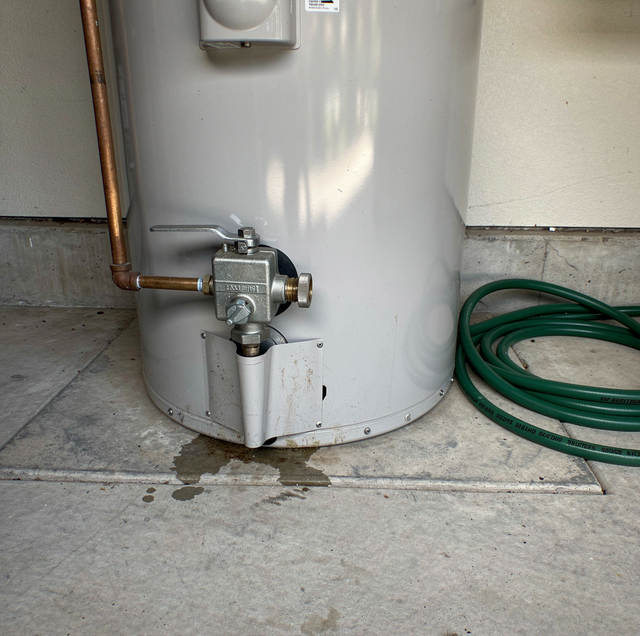
A tank water heater that has never been flushed carries a different sediment problem from one on a routine schedule. Sediment that settles out of the water column has built up and hardened on the tank floor for the tank's whole life, and a bed that thick behaves differently from the loose layer a routine flush is built to clear. A first flush on a tank in that condition carries risks a routine one does not: the drain valve can be seized shut by scale it has never had to move past, sediment loosened after sitting undisturbed for so long can shift in ways a lighter bed does not, and a weak spot in the tank wall that the layer has been quietly hiding can start to seep the moment it is disturbed. None of that rules out flushing an old tank. It changes how the visit is planned: the tank is read first, and the flush follows based on that reading.
What the tank shows on arrival sets the plan:
| What the Tank Shows | What It Means | What to Expect |
|---|---|---|
| Quiet operation, clear hot water | Sediment is present but has not yet caused a symptom | A first flush proceeds as a standard service call |
| Popping or rumbling during heating | A hardened sediment bed is trapping water underneath it | The flush is planned for a thicker bed and can take more than one pass |
| Rust-colored hot water | Corrosion inside the tank, at a fitting, or a spent anode | The anode and the tank are checked before a flush goes ahead |
| A damp base or a weeping fitting | The tank already has an active leak | Flushing waits for a repair-or-replace call |
| A drain valve that is stiff or already dripping | The valve itself may not survive being opened | Replacing the valve can become part of the flush |
| An old tank with no service history | Age and condition are unknown until the tank is inspected | The flush becomes the first data point in a repair-or-replace decision |
What the Sediment Layer Does to a Neglected Tank
In a tank flushed on a regular schedule, minerals that drop out of the water as it heats stay loose enough to be pushed out with the draining water. Left alone for years, the same mineral compacts under its own weight and under repeated heating cycles into a hardened crust rather than loose grit. A dense layer of insulation insulates the tank floor and keeps heat from reaching the water above the crust, so the burner or lower element runs longer to do the same job, and the steel under the crust carries more heat than that spot was ever built to hold. A layer that thick is also behind the popping and rumbling sound a running tank can make as trapped water works its way up through it.
A crust that has hardened for years does not clear the way loose sediment does. Judging a neglected tank means judging how much of that layer is realistically going to come out in one visit, and planning the flush around the answer rather than assuming one pass will finish the job.
The Drain Valve Is the Real Risk in a First Flush
A drain valve on a tank that has never been opened has spent years with scale packed around its seat, and that scale does not announce itself until the valve is asked to move. Turning the handle on a valve like that can meet real resistance, and forcing it is how a brittle plastic valve shears off while the tank is still full of hot water under full supply pressure. A valve that opens does not always close cleanly either: scale caught in the seat can keep it from sealing, leaving a drip at the valve that was not there before the visit. A valve that opens can also clog partway: flakes of loosened crust pack the narrow passage in the drain valve, and the stream slows to a trickle or stops while sediment remains in the tank.
A drain valve that will not close again after a first flush is a repair of its own. A stuck plastic valve is swapped for a full-port valve that seals cleanly, a fix that touches nothing else on the tank.
Because a flush on an untouched tank cannot start until its drain valve opens and cannot finish until that valve closes, the valve's condition determines how a first flush is approached.
Tank water and the flush hose run scalding hot and can burn anyone near the drain. A technician shuts off the gas or breaker, closes the cold supply, opens the drain valve, and never forces a valve that resists turning.
What a First Flush Can and Cannot Recover
A flush restores the volume and heat transfer that the loosened part of the layer was taking away; crust bonded hard to the floor can stay behind. What a flush does not do is repair anything already wrong underneath the layer. If the tank lining had already started to fail before the visit, clearing the sediment does not reverse it; the flush can only bring an existing leak the crust had been hiding into view. Sediment, when loosened in large amounts, can settle somewhere new inside the tank rather than leaving entirely, which is one reason a heavily crusted tank sometimes needs more than one drain-and-refill cycle to fully clear. A flush is maintenance for a tank that is already sound underneath the layer.
The Anode and Relief Valve Checks That Come with a Tune-Up
Two other checks go with a flush on a neglected tank. The anode rod protects the tank from the inside by corroding in the water's place, and a rod that has never been checked on an old tank is worth inspecting while the tank is already open for service. The relief valve on top of the tank is the safety device that vents the tank if pressure or temperature climbs too high, and confirming it still opens and reseats is part of the same visit rather than a separate one.
When Replacement Makes More Sense than a First Flush
Not every neglected tank is a flush candidate. A damp base or a weeping fitting indicates that a joint or the tank wall has already given way; rust-colored water can come from a spent anode or the tank itself, and running water through a compromised tank can turn a slow seep into a real leak. An old tank with no service history at all is graded on more than just sediment: how the tank looks at the seams, what the drain valve does when tested, and whether the water coming out ever runs clear are all part of that judgment. A tank that fails that read is one where flushing was not the right question to begin with, and the visit turns into a repair-or-replace conversation before a hose is ever connected. Age alone does not settle it either way: a tank that has simply never been serviced can still be a good flush candidate if the seams, the base, and the water itself all check out clean.
Frequently Asked Questions
No. The visit closes only the water heater's own cold-water shutoff, the valve feeding the tank itself, so every other tap in the home keeps drawing water while the tank is being flushed. An installation with no working shutoff at the heater is where the home's main supply gets closed instead.
Not an ordinary garden hose. Flush water leaving a neglected tank runs close to the temperature the tank itself holds, and an everyday vinyl hose can soften or partly collapse under that heat over the length of a flush. A hose rated to carry hot water is used in its place.
Clearance above the tank decides it. A straight anode rod has to be pulled out in one piece, which takes open ceiling space directly above the heater, and a garage or closet installation does not always have that room. A jointed rod made of short segments threaded together can be worked out in pieces where a straight one will not physically clear the ceiling.
It can. Particles loosened during a flush do not all leave through the drain hose; some travel back into the supply lines and lodge in aerators or cartridges at the nearest fixtures. Running the faucets closest to the heater with the aerators removed clears that loosened material out before it causes a separate clog elsewhere in the house.
Hard mineral grit crumbles between the fingers; soft, irregular white flakes that bend can be pieces of a deteriorating plastic dip tube, the tube that feeds the incoming supply down to the tank floor. A breaking dip tube is checked and replaced as part of its own water heater repair, since flushing does not stop it from shedding.
It depends on how it clears. Water that turns milky and clears from the bottom of a glass upward is air the refill trapped in the lines, and it passes as the taps run. Water that stays tinted or leaves grit settling in the glass is sediment the pass did not reach, and the tank gets another drain-and-refill.
Reserve a water heater flush and tune-up — sediment removal, a drain valve check, and an anode and relief valve inspection. Ser Plumbing serves Paramount, Bellflower, and Lakewood. Call (310) 953-3566.