Home/Services/Drains & Sewers
Drains & Sewers

Clay Sewer Pipe Replacement in Paramount, CA

The Pipe Is Usually Fine, the Joints Are Not | Root Intrusion Traced to Its Entry Point | CSLB #1051553 | Se Habla Español

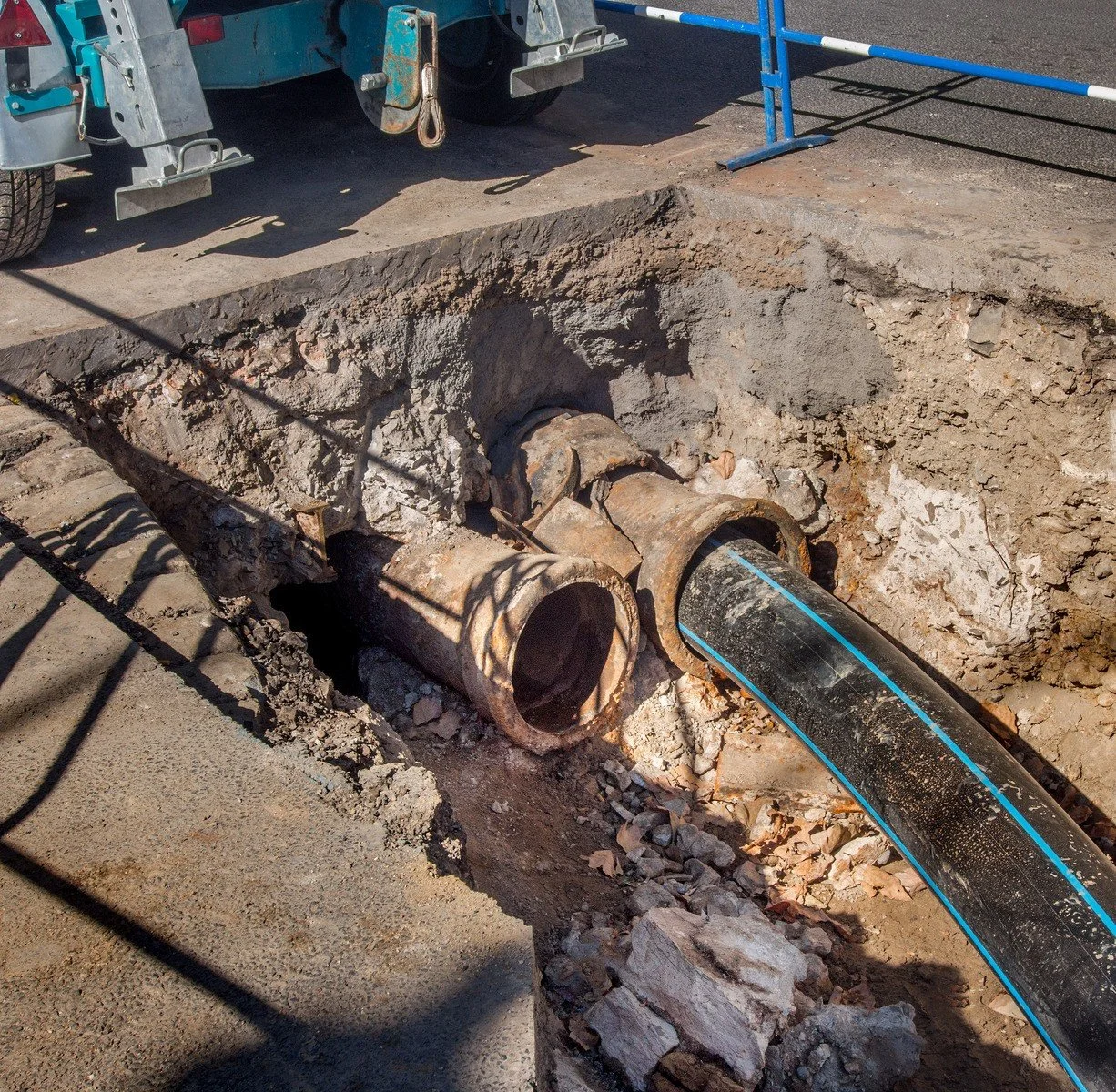
Vitrified clay is close to chemically indestructible. It does not rust or corrode, and lines laid two or three generations ago are still carrying sewage beneath these neighborhoods. What clay does not do well is stay sealed. It went into the ground in short lengths, and every place two lengths meet is a seam that roots, soil, and time can work on.

Ser Plumbing traces clay line failures back to the joint that caused them rather than clearing the same roots every spring. Camera first, entry points identified, then a plain conversation about whether the run wants sealing, sectioning, or replacing.

Cutting roots restores flow for a season. It does nothing at all about the opening they came through, which is why the calendar keeps repeating.
CSLB License #1051553Licensed, Bonded & Insured5.0 Google RatedCamera Footage Is Yours to KeepSe Habla Español
Clay sewer pipe replacement in Paramount, CA by Ser Plumbing Excellent on Google 5.0 Verified customer reviews Root-traced Root intrusion traced to its entry point
At the joints Root intrusion traced
to its entry
$250Camera inspection
15 miNo travel fee from Paramount
5.0Google rated across SE LA
LicensedBonded & insured · CSLB #1051553
The problem

Why People Call

A handful of symptoms cover almost every call. Each one points somewhere different, and the difference is usually real money.

Roots come back every year like a subscription

Because nothing about cutting them addresses how they got in. Fine roots follow moisture and warmth as they escape from a seam, then thicken inside the pipe where conditions are perfect. Clear them and the seam is still there next spring.

The line backs up after heavy rain and behaves the rest of the year

Rain-linked backups point at seams and cracks that let groundwater in, adding volume the line was never sized for and washing soil in with it.

The camera stops at a ledge

A segment that has settled or rotated leaves a step where two lengths meet. Waste catches on that step, and no amount of cabling will remove a step.

The city cleared the main, and your line still backs up

The main in the street belongs to the agency that maintains it; in Paramount, that is the City itself. The run from your house to that connection is yours, and it is the part that carries the seams. When a backup survives a main-line clearing, the finding is usually on the private side.

Local conditions

Clay Under Paramount

The City of Paramount publishes a description of its own sewer system that tells you a great deal about what is under the private property beside it: roughly 62 miles of gravity sewer, the overwhelming majority of it 8 inches in diameter, predominantly vitrified clay, with most of it installed between the 1940s and the 1980s. Laterals were laid to the same standard in the same decades by the same trades from the same material.

What matters about those decades is how the seams were made. The oldest work in this basin was sealed with oakum and cement mortar, a rigid seal that does not tolerate ground movement. Post-war work moved to poured bituminous compounds. Factory-made rubber compression seals came in over the following decades and are markedly better at keeping roots out. So, an early post-war line and a 1960s line are the same material with different odds, and the house's age is genuinely diagnostic here.

Aging galvanized and copper supply line conditions in Southeast LA County
What's covered

What's Covered

01

Camera location of every entry point

We map the run seam by seam and mark where roots, groundwater, or soil are getting in, with the locator giving each finding a position in the yard rather than a vague description. /plumbing-camera-inspection

02

Root cutting and hydrojetting as a first step

Clearing comes first because you cannot see a seam through a root mass. It restores flow, and it buys reading time; it is not the repair, and we will not sell it as one. Where a line is already fragile, we say so before jetting it, because pressure through open seams can widen what it finds. /hydrojetting

03

Sectional replacement at a failed seam

One separated seam under a lawn is a dig and a section, not a project. Clay is cut and coupled cleanly when the surrounding segments are sound.

04

Full replacement and pipe bursting

A run with a dozen compromised seams is a replacement conversation. Clay bursts particularly well, fracturing outward and leaving a continuous new pipe with no seams for the next generation of roots. /trenchless-sewer-repair

05

Cleanout access so the line can be maintained

A root-prone line that cannot be properly reached is a line that is treated badly. Where there is no usable access, we price one, because it changes the cost of every future visit. /sewer-cleanout-installation
Ser Plumbing running a sewer camera at a residential cleanout
Not on this page

Cast iron sewer lines, which fail by a completely different mechanism /cast-iron-sewer-pipe-replacement

The public main in the street, which belongs to the agency that maintains it

Branch drain and waste lines inside the house /drain-line-repair-replacement

Pricing

Pricing

Cost drivers on clay specifically: how many seams are compromised rather than how many feet the line runs, the depth, what is planted or poured above it, and whether the failures cluster in one stretch or scatter across the whole length.

ItemHow it works
Sewer camera inspectionFrom $250
Main line cleaning and root cuttingFrom $200
Hydrojetting (residential)Typically $475 to $750; severe lines run higher
Sectional repair at a failed seamQuoted from footage: position, depth, and what is on the surface
Full replacement or pipe burstingProject pricing after inspection

Standard labor discounts apply (military and first responders 10%, seniors and teachers 5%, first-time customers 10% on qualifying repairs).

The visit

How a Clay Line Job Works

01

We ask how often the roots come back and what month it usually happens. A yearly pattern and a rain-linked pattern point to different findings.

02

Clear first if the line is blocked, because a camera cannot read a seam through a root ball.

03

Camera pass with a locator, marking each entry point on the ground so you can see how the findings sit relative to trees and hardscape.

04

The count matters more than the length: we tell you how many seams are compromised and where they cluster.

05

Options in writing, from sectioning one seam to replacing the run, with the reasoning for each.

06

Work carried out under the permit the city asks for, and the surface put back to the condition agreed beforehand.

07

Final camera pass, so the new line is documented the same way the old one was.

Why Ser Plumbing

Why Ser Plumbing for Clay Lines

01

We find the doorway, not the mass

Anyone can cut roots. Locating the seam they came through is what turns an annual expense into a decision you make once.

02

We count seams before we quote feet

Sixty feet of clay is dozens of seams, and what matters is how many of them have failed and whether they cluster. That count is the difference between a section and a replacement.

03

We say when cutting roots is the right call this year

Sometimes the line has years left, and a clearing is all it needs this year. We will say so and take the smaller job.

04

We establish which side the problem is on

The main in the street belongs to the agency that maintains it and the lateral belongs to you. Confusing the two wastes your time, so that question needs to be settled before anything else.
Sewer camera footage showing root intrusion in SE LA County line
Expertise

Why the Roots Always Come Back

A root does not drill through clay. It cannot, and it does not need to. Warm, moist air escapes from a seam that is no longer sealed; a fine root finds that trace of moisture in dry soil, and it grows toward it because that is what roots do. Once a hair-fine root has passed through the seam, it is inside a pipe that offers everything a tree wants, and it thickens there in a way it never could in the surrounding ground. A cutting head removes the mass, leaving the doorway untouched, which is why the calendar repeats, and the interval usually shortens each time.

The other thing time does to clay is move it. Short segments in ground that settles unevenly do not crack so much as step: one length drops or rotates at its seam and leaves a ledge inside the line. Waste catches on a ledge the way it never catches on a smooth run, and no cable, no jet, and no liner corrects it, because a liner takes the shape of what it is inflated inside. How many seams are compromised, and whether there is a step in the line: those two answers, not the footage total, decide whether this is a repair or a replacement.

Reviews

What Customers Around Paramount Say About Our Sewer Work

Our verified Google reviews load below in real time, unedited.

Leave Us a Google Review
FAQ

Clay Sewer FAQs

Straight answers to the questions we hear on the phone every week.

Ask us directly
Ser Plumbing running a drain camera on a Southeast LA County service call Camera firstWe grade the line before we quote
How long does clay sewer pipe last?
The material itself outlives everybody involved in laying it. The seams are the perishable part, and how long they last depends on how they were sealed and how much the ground has moved since.
Can clay sewer pipe be relined?
Often yes, and it is a strong option here because the clay itself is usually sound and the liner seals every seam in the run at once. What a liner cannot do is correct a step or restore lost fall. → /trenchless-sewer-repair
Can you replace it without digging up the yard?
Frequently. Clay fractures cleanly outward, making pipe bursting a good fit, and the work is done through small access points rather than a trench. Geometry decides, and the camera settles it before you commit.
Are clay pipes fragile?
Strong under even pressure, weak under a point load. That is why the damage we find tends to sit under driveways, added slabs, and anywhere heavy vehicles cross with shallow cover.
Will a root killer solve it?
It can slow regrowth in a line with light intrusion. It does nothing about an open seam or a step, and using it as a substitute for finding out which one you have is how people spend a decade on the same problem.
Does cast iron fail the same way?
Cast iron problems live in the pipe wall. Clay problems live at the seams. Treating the two the same way is a common mistake and leads to the wrong repair. → /cast-iron-sewer-pipe-replacement
Whose responsibility is the line under the street?
In most jurisdictions here, the property owner maintains the lateral serving the home, including its length running under the public right-of-way, and the rule is set city by city. You will hear what applies at your address before any work starts.
Service area

Clay Sewer Work Across Paramount, Downey, Bellflower, Lakewood, Long Beach && SE LA County

Clay line diagnosis, root entry location, sectional repair and replacement from our Paramount shop across the core service area: Paramount, Bellflower, Downey, Lynwood, South Gate, Compton, Bell Gardens, Bell, Walnut Park, Santa Fe Springs, Lakewood, Norwalk, Long Beach, Maywood, Artesia, Cerritos, and East Rancho Dominguez, plus Huntington Park, Cudahy, Pico Rivera, Whittier, Montebello, Signal Hill, Anaheim, and Garden Grove. No travel fee within 15 miles of Paramount.

ParamountBellflowerDowneyLynwoodSouth GateComptonBell GardensBellWalnut ParkSanta Fe SpringsLakewoodNorwalkLong BeachMaywoodArtesiaCerritosEast Rancho Dominguez
Full coverage details →
Get in touch

If the roots come back every year, the seam is still open.

Let us find it: (310) 953-3566.

CompanySer Plumbing Inc
Address7530 Alondra Blvd Suite F, Paramount, CA 90723
Phone(310) 953-3566
Webserplumbinginc.com
LicenseCSLB #1051553 · Licensed, Bonded & Insured · Se habla español
Call (310) 953-3566
Request Your EstimateSend a photo and Luis can often quote before we roll.