Home/Bellflower/Burst Pipe Repair
Bellflower, California

Burst Pipe Repair in Bellflower, CA

Water Stopped First | Cause Named on the Paperwork | CSLB #1051553 | Se Habla Español

Get the main shut, then call.

Afterward comes the question a repair invoice almost never answers: what was that pipe lying in, and is the ground going to do it again in February?
CSLB License #1051553Licensed, Bonded & Insured5.0 Google RatedThe Trench Conditions Get RecordedSe Habla Español
Ser Plumbing service van on a Southeast LA County residential street Excellent on Google5.0Verified customer reviews
No travel feeWithin 15 miles
of our Paramount shop
What we cover

How a Bellflower Burst Shows Up

01

A stain spreading on a ceiling, or a wet line running down plaster

Everything under that ceiling is absorbing water for as long as the line stays pressurized, and the plaster is the last part of it to tell you so.

02

A warm line across the floor that you can follow with bare feet

Water leaving a buried run surfaces wherever the ground is weakest, which is rarely above the break. So, the warm place is where the search starts, and the opening generally gets made somewhere else.

03

The same length of pipe has failed twice now

When the same length fails twice, the pipe has stopped being the interesting part, and the ground around it has started. Either what surrounds that run has changed, or it was wrong from the day it went in.

04

It went in winter, and the last one went in winter

Seasonality on a buried line is a strong signal, and here it points somewhere specific. The ground in March is not the ground in September.

How it runs

How the Repair Runs, Once the Water is Off

The loss is stopped and the building steadied ahead of any figure.

The meter is read with everything closed, which settles whether the water is leaving past it.

Branches are isolated one at a time, with the meter confirming each step, until the failure sits in a section.

Only then is an opening made, and it is made at the point the sequence identified.

The failure is photographed in place, along with what the pipe was bedded in and the state of the trench.

The permanent repair goes into writing with the cause named on it, and that happens before stage two starts.

The opening is backfilled and restored to the standard the estimate stated, and the record goes to you.

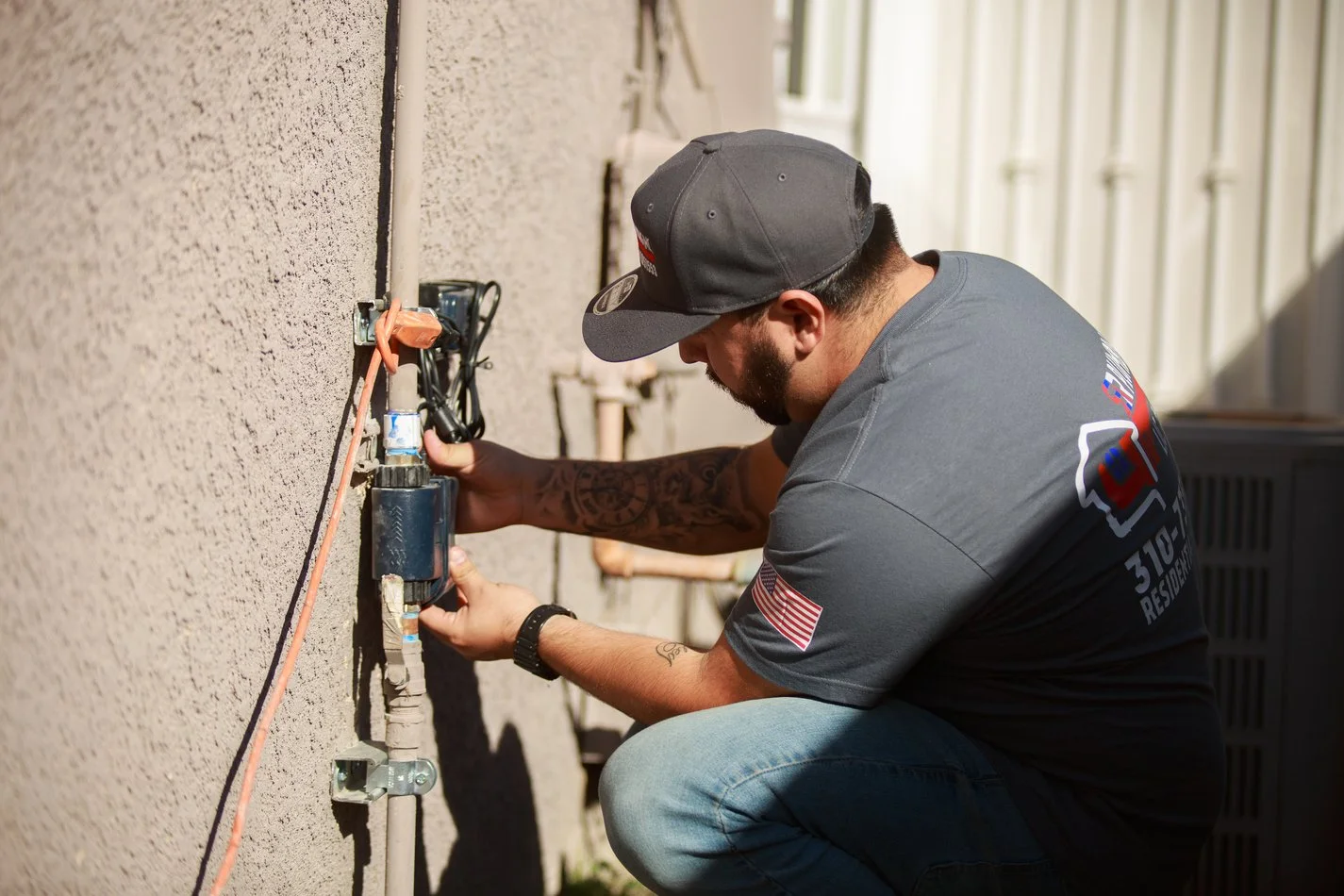
Ser Plumbing plumber working on a residential supply line
The detail

The Ground Around a Buried Line Here Moves with the Season

Bellflower lies within two of the state's seismic hazard mapping quadrangles, Whittier and South Gate, both of which contain mapped liquefaction zones. The criterion the state uses turns on water rather than on shaking: liquefaction hazard may exist in areas where depth to groundwater is forty feet or less. Both reports conclude that historically shallow groundwater, under forty feet, occurred across much of each quadrangle.

Two cautions come with that, and we would rather give them than let the figure do more work than it can. A quadrangle covers roughly sixty square miles and takes in several cities, so nothing in those reports is a measurement of your street. And the groundwater contours in them were built on well logs going back to the early twentieth century, so they describe a mapped historical high rather than what is under your lawn this week. Whether a particular parcel falls within a mapped zone is a per-parcel question, and the state publishes a tool that answers it by address.

What survives all that caveating is the part that changes the work. The same reports record that water levels in this region can vary seasonally by as much as thirty-five feet. So, a trench coming up dry in September says little about the same trench in March, and on a buried repair, the bedding, the backfill, and any dewatering have to be scoped against the wet end of that range. That is why our report on a buried failure names what the pipe was lying in when we found it. New pipe laid back into the same bedding has been handed the job that broke the last one.

What we cover

Isolating It, Reaching It, Restoring the Surface

01

Stopping the loss and steadying the building

Isolation, draining down, and getting the situation off the danger list before any figure is written.

02

Narrowing it down to one opening instead of several

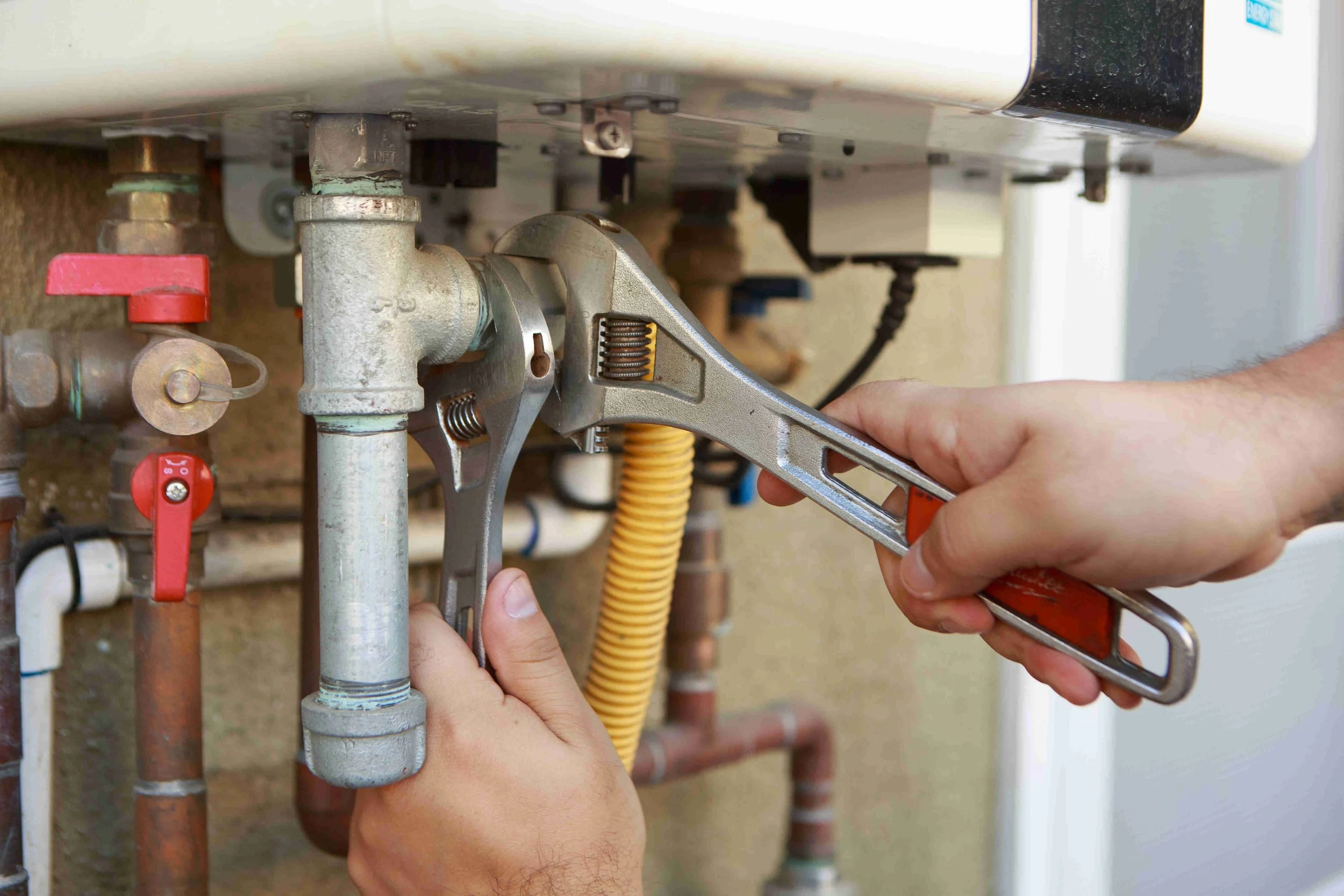
The meter first, then the branch valves, then a look at what is reachable. Diagnosis here is valves and how the system behaves under pressure. No listening gear is involved, and none is claimed.

03

Renewing the failed length

The failed length is renewed, and the run is put back under pressure and watched before the opening is closed. Where the bedding broke it, correcting the bedding is written on its own line on the estimate.

04

Recording the conditions in the hole

What the pipe was sitting in, whether the trench held water, and the date. Photographed before backfill and written into the paperwork.

05

Buried supply runs in the yard and under hardscape

Located from the surface, opened at the marked point, with everything that must come up and go back stated before the work starts.

06

The wider conversation when failures repeat

Where a building has produced more than one, the thing to buy is a walkthrough of the whole supply, quoted as its own visit and kept separate from the repair in front of you. → Repiping bellflower

07

Restoring the opening we made

Backfill, compaction, and a surface brought back to the standard described in the estimate, with the boundary between our finish and a finish trade stated.

Pricing & response

Pricing & Response

One decision moves this figure more than any other, and it is made before a saw comes out: where to open.

Labor discounts apply to qualifying work: military and first responders 10% up to $100, seniors 65+ and teachers 5% up to $50, first-time customers 10% on qualifying repairs, one per job. Commercial work is quoted per site.

ItemBellflower pricing
Service call, residential, standard hours$89
Service call, commercial, standard hours$125
DiagnosticFrom $125, often credited toward the repair
RepairQuoted in writing once the failure is visible
After-hours, weekend and holiday responseQuoted on the phone before anyone is dispatched
What we cover

The Trench Conditions Get Written Down
01

The water goes off before anything is discussed

A pipe emptying into a building is the one part of this that deteriorates by the minute. Everything else waits until it has stopped.

02

What the pipe was bedded in gets written down

Along with whether the trench was wet and the date it was open. On a buried line, that record is what makes a second failure years from now something you can diagnose.

03

Where to cut is decided while the saw is still on the truck

An extra cut is a second patch nobody planned for, so the route to the failure is worked out first and the access made deliberately.

The detail

What the Trench Looked Like While it Was Open

The most useful product of a buried repair is a description of the hole, and hardly anyone takes one. The questions that cover it are short ones. What was the line bedded in: native soil, imported sand, rubble left by whoever was here before? Was the trench dry, damp, or standing in water? And on what date? Thirty seconds with a phone camera before the backfill goes in turns a failure four years from now into a comparison rather than a fresh mystery.

The reason it earns its place here in particular is the season. Regional records for this area show the swing in groundwater levels can be as much as 35 feet over a year. A pipe repaired into a dry September trench can spend February in a saturated one, and bedding material that holds water through the wet months and drains through the dry ones is working on a joint by moving around it. So a repair that only swaps the failed length has answered the symptom. One that also corrects what the pipe is sitting in has answered the condition, and those are different pieces of work with different futures.

The published hazard maps get quoted at owners as though they settled something, and they do not. What the mapping does is tell you the question is live in this area and deserves asking. The answer for your line comes from the hole, which is precisely why someone should write down what was in it.

Ser Plumbing service work on a mid-century home
FAQ

Bellflower Burst Pipe FAQS

Straight answers for Bellflower homeowners. Anything not covered here, just ask.

Ask us directly
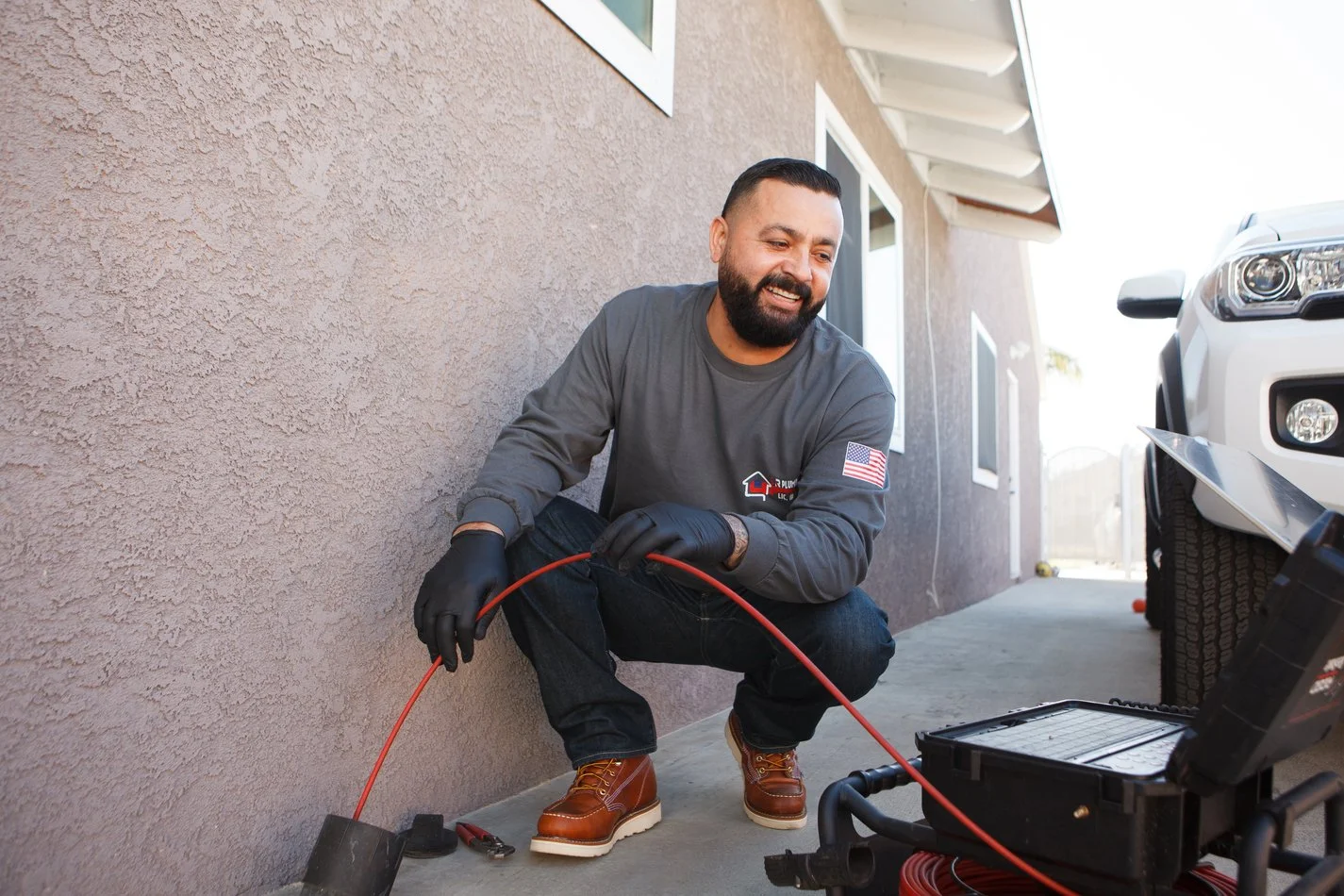
Ser Plumbing technician documenting findings on a service call
How can I tell whether it is on my side of the meter?

The meter settles it in about two minutes, and the branch valves settle the rest. If the low-flow indicator is still moving with the house shut down, the leak is past the meter and on your side. After that, closing one branch at a time puts the failure inside a section before anyone opens ground.

Is my street in a liquefaction zone?

It is a per-parcel question with a published answer, and looking it up takes a minute. Worth knowing before you do: a hit is not a prediction about your pipe and a miss is not a clean bill for it, because those maps are drawn across roughly sixty square miles at a time. Use the result to decide how hard to push for the trench to be photographed while it is open, which is the part of this you can act on.

This pipe was fine for forty years. What changed?

Insist that the cause is named in the paperwork. A failure described only as sudden has not been diagnosed. On a buried run, the other half of the question is what changed above the pipe: a driveway poured, a bed put on an irrigation timer, a tree taken out, a yard regraded. Any of those alters what the pipe is lying in without anyone going near the pipe, and they are worth listing for whoever is standing in the hole.

Will my insurance cover this?

That is a policy question, and we are not a party to it. Where we can help is at the front end: during a buried failure, the trench conditions are only visible for a few hours, so they get photographed before backfill, whether or not a claim is ever made.

Reviews

What Bellflower Customers Say

Our verified Google reviews load below in real time, unedited.

5.0★★★★★Google Rating · verified reviewsLeave us a review
Service area

Burst Pipe Repair in Bellflower and across SE LA County and North Orange County

Burst and split supply line repair from our Paramount shop across the core service area: Paramount, Bellflower, Downey, Lynwood, South Gate, Compton, Bell Gardens, Bell, Walnut Park, Santa Fe Springs, Lakewood, Norwalk, Long Beach, Maywood, Artesia, Cerritos, and East Rancho Dominguez, plus Huntington Park, Cudahy, Pico Rivera, Whittier, Montebello, Signal Hill, Anaheim, and Garden Grove. No travel fee within 15 miles of Paramount.

Full coverage details at Service areas

Book now

Book Bellflower Service

Water off, then (310) 953-3566. And ask for a photograph of the trench before it goes back.

Call (310) 953-3566
Book Bellflower ServiceSame-day with a morning call. Se habla español.