
What a Whole-Home Water Filter Removes (and Skips)
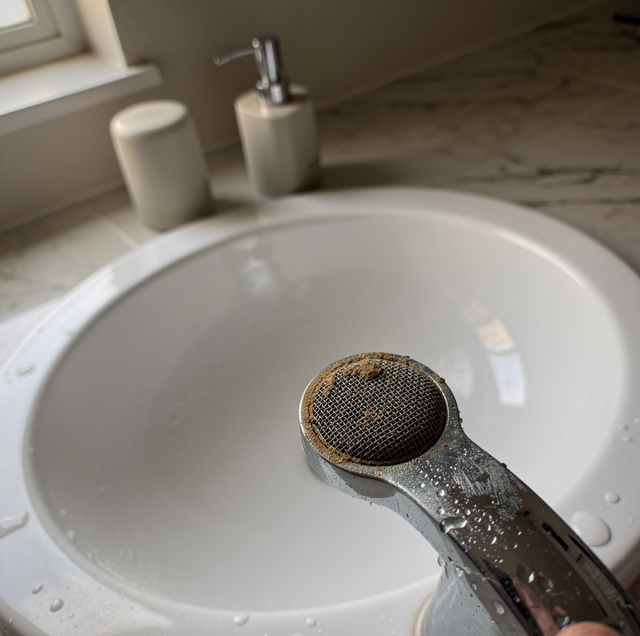
Ads for whole-home water filtration tend to promise everything at once: better-tasting water, no more scale, no more sediment, all in one box mounted near the water heater. Before picking a system, it helps to work backward from what's actually bothering you, because "whole-home filter" is a category, not a single fix, and the media packed inside two units with the same label can do very different jobs.
Start With the Symptom, Not the Label
A chlorine smell in the shower, gritty residue in an aerator, white scale on fixtures, and rust-colored staining in a tub are four different problems with four different solutions. Chlorine or chloramine taste and odor call for an activated carbon stage. Sediment and grit call for a mechanical pre-filter rated by micron size. White mineral scale is a hardness problem, which is best handled by an ion-exchange softener, not a carbon filter. Iron or manganese staining requires an oxidizing medium formulated specifically for those metals. Naming the symptom first, before comparing systems, keeps you from paying for capacity you don't need or from missing the one stage that would actually have solved it.
What "Whole-Home" Actually Means
A whole-home system, sometimes called point-of-entry (POE), gets plumbed into the main line after the shutoff valve and before the water splits off to individual fixtures, so every tap, the water heater, the washing machine, and the ice maker all draw from treated water. That's different from a point-of-use filter, like a pitcher, a faucet-mounted cartridge, or an under-sink unit, which only treats water at that one location. A whole-home unit is a bigger commitment of space and plumbing work, which is exactly why matching its media to your actual water problem matters more than it would for a basic pitcher filter.
The Media Inside Decides What Comes Out
Every whole-home system is built around one or more of a handful of media types, and each does a specific, limited job.
Sediment Pre-Filters: These are mechanical screens, usually pleated or spun-poly cartridges rated in microns, that physically strain out sand, rust flakes, and other particulate matter before water reaches the next stage. A 5-micron or 20-micron rating indicates the smallest particle size it reliably captures; a coarser rating protects downstream equipment but does little for taste or hardness.
Standard Activated Carbon: Carbon works through adsorption, meaning contaminant molecules bind to the carbon surface as water passes through, rather than being physically screened out. It's effective against basic chlorine taste and odor and many volatile organic compounds, but standard carbon is comparatively slow to break down chloramine, the more stable disinfectant now used by many municipal systems in place of straight chlorine.
Catalytic Carbon: This is carbon manufactured with a different surface structure specifically to speed up the chemical breakdown of chloramine, which passes through standard carbon far more readily. If your water utility uses chloramine, and many do, catalytic carbon does the job a basic carbon cartridge can't.
KDF Media: KDF is a copper-zinc alloy that removes some chlorine and certain heavy metals through an electrochemical reaction, and it's also used to inhibit bacterial growth within a carbon bed, since a wet carbon bed is otherwise a place bacteria are happy to colonize.
Filter Type Comparison
| Media Type | What It Removes | What It Doesn't Touch | Typical Service Interval |
|---|---|---|---|
| Sediment pre-filter | Sand, rust flakes, silt, visible particulate | Chlorine taste, hardness minerals, dissolved metals | Cartridge swap every 2-4 months |
| Standard activated carbon | Chlorine taste/odor, many VOCs | Chloramine (slowly, if at all), hardness, dissolved solids | Media or cartridge change every 6-12 months |
| Catalytic carbon | Chloramine, chlorine taste/odor, many VOCs | Hardness minerals, dissolved metals like lead unless paired with KDF | Media change every 12-24 months |
| KDF (copper-zinc) | Some chlorine, certain heavy metals, inhibits bacterial growth in the bed | Hardness minerals, sediment, VOCs on its own | Media change every 3-6 years depending on flow volume |
| Ion-exchange softener | Calcium and magnesium (hardness) | Chlorine taste, sediment, bacteria, most dissolved metals | Resin lasts 10-15 years; salt refilled regularly |
What a Standard Filter Does Not Touch
This is where the marketing gap is most evident. Calcium and magnesium, the minerals responsible for hard-water scale on fixtures and appliances, pass straight through sediment and carbon media untouched. Neither mechanism is built to pull dissolved minerals out of solution; that's an entirely different chemical process, handled by a softener, not a filter. Likewise, dissolved contaminants such as nitrates, sulfates, or arsenic require media specifically selected and rated for them, not a general-purpose carbon cartridge. And filtration alone, without a UV disinfection stage, does not reliably address bacterial contamination; carbon can even become a place bacteria multiply if it isn't paired with an inhibiting media like KDF or maintained on schedule.
Softening Is a Separate Mechanism, Not an Upgrade to Filtering
A water softener works through ion exchange: resin beads inside the tank are coated with sodium ions, and as hard water passes through, calcium and magnesium ions swap places with the sodium, leaving softened water on the other side. Over time, the resin's sodium supply runs low, and the system regenerates, flushing a concentrated brine solution through the bed to recharge it before returning to service. This is a different physical process from anything a carbon or sediment filter does, which is why a softener is typically installed as its own stage rather than swapped in for a filter, and why a system marketed as "whole-home filtration" that doesn't mention ion exchange isn't going to touch your hardness problem no matter how many stages it has.
How to Match a System to Your Actual Water
A water test, either a lab analysis or a reasonably reliable home test kit, tells you what you're actually dealing with: hardness measured in grains per gallon (gpg), chlorine or chloramine concentration in parts per million, and whether iron, manganese, or anything else specific shows up. From there, a system gets built in stages matched to the results: a sediment pre-filter to protect everything downstream, a carbon or catalytic carbon stage sized to your chlorine or chloramine level, and a softener added separately if hardness is part of the problem. Buying a single generic cartridge and hoping it covers everything usually means paying for capacity aimed at a problem you don't have while leaving the one you do have unaddressed.
Where Installation Placement Changes Performance
Where a whole-home unit gets plumbed in matters almost as much as which media is inside it. A system installed too close to the main shutoff, ahead of an irrigation line or a pool fill valve, ends up treating water that never reaches an indoor fixture, which wastes media capacity on flow the household never actually uses. Installing after any branch that feeds outdoor spigots, and before the line that feeds the water heater, keeps the treated capacity focused on the water people actually drink, bathe in, and run appliances with. A plumber sizing the install also checks the home's peak simultaneous flow rate, since a filter housing rated for a single bathroom's demand will bottleneck the moment two fixtures run at once, regardless of how well the media itself performs.
Bypass valves are worth asking about specifically. A properly plumbed system includes a bypass loop so the whole house isn't shut off for tank service or a cartridge swap, and so a lawn sprinkler system or outdoor hose bib can be routed around the filter entirely if there's no reason to treat water headed for the yard.
Housing size is the other placement detail that gets skipped. A single small canister sized for a two-bathroom home will restrict flow if the house has since added a bathroom or a tankless water heater with its own higher flow demand. Matching the housing diameter and cartridge length to the home's actual fixture count, not just the water quality problem, is what keeps a filter from becoming the reason a shower runs weak when the dishwasher kicks on.
Whole-home filtration earns its cost when the media inside actually matches what's in your water, not when it's chosen off a label promising to fix everything at once. A short test and a plain look at which symptom actually bothers you does more to get the right system installed than any spec sheet on its own.
Frequently Asked Questions
Most cartridges and tank media are rated by gallons treated, often in the range of 100,000 to 300,000 gallons for a residential carbon stage, along with a calendar-based interval such as 6 to 12 months. A larger household running more water through the system daily will hit that gallon rating faster than the calendar suggests, so actual household water use matters as much as the printed timeframe.
A correctly sized single stage loses only a few psi across the media at normal single-fixture flow. That drop compounds, though, when several stages are plumbed in a row, since a sediment pre-filter, a carbon tank, and a softener each cost a few psi on their own, and stacked together the total can become noticeable even when every individual stage is sized correctly. A larger-diameter housing, commonly 4.5 inches instead of the standard 2.5, moves more water through the same media without adding to that drop, which is the usual fix when a multi-stage setup starts pulling down pressure.
Only if it specifically includes a lead-reduction media, such as certain KDF blends, that's been independently tested and certified against NSF/ANSI Standard 53, the certification that covers health-related contaminants rather than just taste and odor. A basic carbon-only cartridge without that certification wasn't designed to remove lead from solution, so the presence of a filter doesn't automatically mean lead is being addressed; the certification label, not the marketing copy on the box, is what actually confirms it.
Some carbon and sediment systems use an automatic backwash tank that periodically reverses water flow, often on an overnight timer, to flush trapped particulate from the media bed and reset its capacity, extending media life compared to a straight cartridge swap. That timer- or metered-valve needs a nearby outlet to run; a standard cartridge-style filter, by contrast, works on water pressure alone and requires no electricity at all.
Because a point-of-entry filter treats water before it splits off to every fixture, including a refrigerator's ice and water lines, a noticeable change in taste and smell usually appears within the first full tank refill after installation, rather than taking weeks to become apparent.
Yes. A sediment or carbon pre-filter is commonly plumbed in ahead of an existing softener, which protects the softener's resin bed from sediment fouling and allows it to regenerate and exchange ions more efficiently, rather than working around debris it wasn't built to filter.
Get your water tested and matched to the right filtration setup — no guessing, no oversized systems. Ser Plumbing serves Paramount, Bellflower, and Lakewood. Call (310) 953-3566.
