
5 Signs Your Shower Valve Needs Repair Behind the Handle
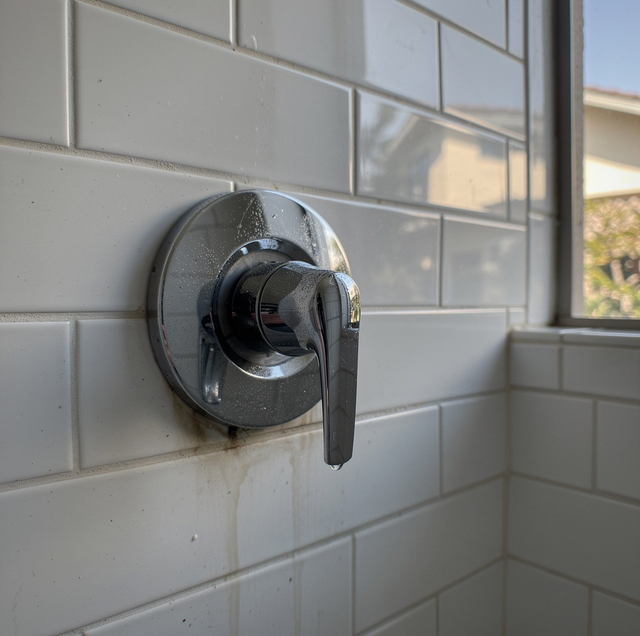
The toilet down the hall refills and the water on your shoulders climbs. Two seconds later it settles back, and you finish the shower having quietly blamed the water heater. The heater is nowhere near this. What happened happened inside the wall you were standing next to, in a brass body the size of a fist, whose only job is to hold the hot and cold sides in the same proportion while the pressure behind them moves.
A shower valve wears the way any moving fit carrying mineral-bearing water wears, and the wear turns up at the handle and in the tile around it long before the shower stops running. Reading those signals early keeps a Saturday morning from going to a heater that is behaving perfectly.
A Mixer That Works on Pressure Alone
Two supplies arrive at your valve, and one blended stream leaves it. The valve standard covering automatic compensating valves for individual showers and tub/shower combinations sorts them by their response. A pressure-balancing valve responds to a pressure change: a sliding spool or diaphragm shifts the moment one inlet weakens, throttling the stronger side until the hot-to-cold ratio returns. A thermostatic valve moves on the outlet temperature instead, driving a wax element against a seat. From the room, the two look identical, because everything separating them sits behind your escutcheon.
One manufacturer's comparison of valve types makes the consequence explicit. Under that standard, a pressure-balancing valve is tested against a fifty percent swing in inlet pressure, up and down, on either supply. It is not tested for a change in inlet temperature at all, while the thermostatic and combination types are held to a 25-degree rise on the hot side. Nothing in a pressure-balancing valve is measuring heat. So when the water arriving from your heater warms up, it warms up at your shoulders by the same amount, and the valve did exactly what it was built to do.
Temperature Swings and Handles That Wander
These signs come in order, from a spool that is still moving badly to a stem that has stopped moving at all. First is the swing. Another fixture opens, the cold side loses pressure for a second, and the shower climbs before it settles back.
The second shows up at the handle. The setting that gave you a comfortable shower a year ago now sits further around toward hot. A spool binding in its bore passes a different share of cold at every position, and your comfortable range slides around the arc with it. Weak flow can arrive with it. A restriction ahead of the valve pulls one inlet down; the spool throttles the other side to match, and volume falls while the temperature holds steady.
Third, the handle turns, and the water does not follow. A stem broach rounded off inside the cartridge, or a retaining clip that has walked out of its slot, leaves the handle sweeping through its travel with nothing coupled to it. The water sits where it already was.
All three separate from a whole-house supply problem by where else they show up. Open the kitchen tap while someone flushes and watch whether it wanders the way yours does. When every fixture wanders, and the shower is only where you notice it, the fault is upstream of your valve.
Water Where the Handle Is Off
The fourth sign is water leaving your fixture when nothing is turned on, and it is worth separating from something normal. While a tub and shower combination is running, the spout below is allowed to pass a trickle; a manufacturer's troubleshooting document for its diverter valves cites a standard allowance of a tenth to three-tenths of a gallon a minute from a diverted spout. The allowance covers a valve in use. A spout or head that drips with your handle off has a seat or a seal no longer closing, and it worsens because flow past a leaking seat cuts it deeper.
The fifth sign shows up outside the fixture altogether. Damp grout at the base of the escutcheon, or a stain widening on your ceiling below an upstairs bathroom, points to water leaking from the valve body rather than the showerhead. What makes it urgent is timing: a worn seat leaks only while the handle is open, but a failed body joint or a cracked casting is under supply pressure every hour of the day, whether you are home or not. Water reaching framing from behind is why a weeping valve outranks a swinging one on a plumber's schedule.
When Is a Shower Valve More Than a Comfort Problem?
A working pressure-balancing valve does more than hold a proportion. One manufacturer's comparison of valve types records what all three types are tested to do when the cold supply fails outright: outlet flow falls below half a gallon a minute within five seconds, and gets there before the outlet passes 120 degrees in that test. The valve protects you by shutting the shower down, not by cooling it.
All of that depends on the spool sliding. Mineral deposit in the bore or a spring that has taken a set will stop it, and a valve that has stopped compensating behaves like a plain mixer. Whatever proportion the handle last set is, that's the proportion you get, so if the cold side drops away, the outlet climbs with the hot side and keeps climbing.
A seized pressure-balance spool leaves the shower at whatever your hot supply is delivering. The burn is not the only injury available: a person steps away from that stream before they think, on a wet floor.
The dividing line is recovery. A swing that comes back within a second or two means your valve is still doing arithmetic. A swing that holds until somebody closes the other fixture, or a shower that will not come off full hot at any handle position, is a valve that has stopped, and the safe move is to keep your household out of that shower until a plumber has the trim off.
The Stops Built Into the Valve Body
A cartridge swap that takes ten minutes can take your whole house's water with it for an afternoon, because the shutoff that should have isolated that one valve was never fitted or has seized shut. Every tap goes dry, and a small repair turns into one scheduled around your whole household.
The part that prevents it is a service stop, and it lives on the inlets of the rough-in body itself, behind the escutcheon and inside the wall opening. A manufacturer's service document for its own valve line notes that many of them carry integrated screwdriver stops, and it directs anyone chasing a no-water complaint to verify they are open. A flat blade closes each one, and that valve alone comes off line while the rest of the house keeps running.
Not every rough-in body has them, whatever fixture it feeds. One manufacturer sells its universal valve with supply stops and without, as two separate part numbers, so the answer for your shower sits on the body itself. And a stop that has not been moved since the wall was closed can be seized solid when it is finally needed, which a plumber discovers with the trim off and the water running.
Frequently Asked Questions
One manufacturer's comparison of valve types puts the life-cycle test behind the valve standard covering automatic compensating valves, which specifies 100,000 cycles and applies to all three valve types the standard covers. The test runs on a new valve with clean water, so the number describes what the design was built to withstand. It says nothing about how a deposit from your own supply affects the same spool, which is why two identical valves in one house age differently.
A manufacturer's troubleshooting document for its own valve line says it does. The pressure-balancing unit needs pressure at the hot and cold inlets simultaneously, and with only one side live, the diaphragm inside blocks the outlet, so nothing reaches your head at all. That document gives 45 psi as the minimum on both supplies for those valves. If your shower went dead immediately after a cartridge change, a closed stop on one of your inlets is worth checking first.
Different standards and different positions in the house. The valve standard covering automatic compensating valves applies at the fixture, where you hold the flow and temperature controls, and nothing mixes downstream of the device. A separate standard covers temperature-activated mixing valves for hot water distribution systems, which sit at the source and temper the water before it leaves. A valve at the heater cannot sense a toilet filling on your floor.
A rotational limit stop belongs to your trim rather than to the balancing element. It is a toothed plastic or brass ring sitting behind your handle, and moving it one tooth changes the farthest-hot position your handle can reach. The stop caps travel and nothing else. It plays no part in compensating for a pressure change, so a shower that swings when another fixture opens is not corrected by repositioning it.
It is one of the ordinary reasons. The balancing element is a sliding fit inside a machined bore, and deposit buildup on the bore wall reduces the clearance it needs, so the handle requires more force, and the spool needs a larger pressure difference before it moves. You feel stiffness first, followed by a slower recovery from a swing, and both worsen steadily with use.
Because the trim and the body are two different parts and only one of them holds water. Your trim is the handle, the escutcheon, and the sleeve, all of which unscrew from inside the shower. The body is the brass casting behind the finished surface, joined to the supply lines and never designed to come out through the trim opening. Replacing a body means opening the wall, from the shower side or from the room behind it.
Book a shower valve inspection — a licensed plumber finds the make and series cast into the brass behind the wall, so the cartridge or rough-in body is ordered to match. Ser Plumbing serves Paramount, Bellflower, and Lakewood. Call (310) 953-3566.
