
Quick Answer: Preparing for a repipe means clearing physical access and planning around the water. Empty under-sink cabinets and vanities, clear closets on shared walls, take things off the walls being opened, and arrange parking, pets, and showers before day one.
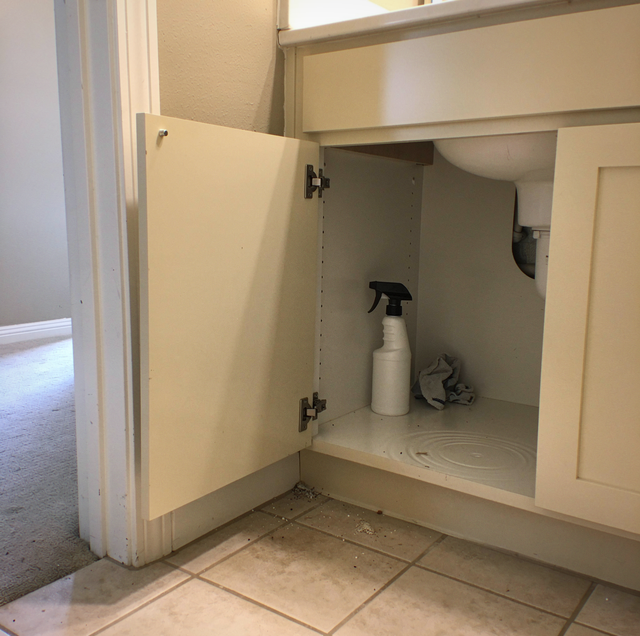
The vanity in the hall bathroom holds the usual inventory: a hair dryer with its cord wound around it, a basket of half-used bottles, a stack of towels somebody folded once, and a box nobody has opened since the move. None of it is in anybody's way in an ordinary week. On the first day of a repipe, it is the only thing standing between a crew and the two small valves they have to reach, and somebody ends up kneeling on your bathroom floor taking it out by hand.
That vanity is the preparation question in miniature. Reaching water lines means reaching the walls, ceilings, and cabinets they run behind, so anything of yours sitting in front of that path has to be somewhere else first. Most households stay put through the work in reasonable comfort. How comfortable is decided almost entirely by what happened the weekend before.
The Cabinets and Vanities Come Out First
Start where a fixture connects, because those are the first spots a crew works and the last ones anybody thinks to clear.
Under every sink: the kitchen, each bathroom, the utility sink. Empty it to the back wall rather than to the front row. Pull-out trash frames, tiered organizers, and the tray under the cleaning bottles come out too, since they sit where a wrench needs to swing. Clear the counter above and the linen cabinet beside the vanity, which usually shares the same wet wall.
The laundry area: clear the shelf above the machines and the baskets beside them. Somebody has to stand between the machines to reach the laundry valves.
Around the water heater: an arm's reach of clear floor on every side, plus a path to it. Storage stacked against a heater is the commonest obstruction in a garage.
Use boxes rather than piles, one per room, labeled with the room name, and stage them where the crew is not working.
What to Cover, and Which Ceilings to Ask About
Because the new lines arrive from above, access openings turn up high on walls and in ceilings rather than low near the floor. Debris and dust fall, so the surfaces to cover are the horizontal ones underneath: counters, dressers, the top of a bookcase, a bed, and the whole floor of a room rather than one corner. Furniture pulled a couple of feet off the wall and covered is better placed than furniture pushed tighter against it.
It also means a ceiling can be opened in a room where nothing uses water, because the run crossing above it feeds somewhere else. Ask before day one which ceilings are on the list, and be clear on the patching scope you agreed to, since that sets how long the covers stay on. Keep everyone out of a room while a ceiling above it is open, since drywall dust, insulation, and cut fasteners come straight down.
Room by Room, the Night Before
| Room | What comes out | What comes off the wall | Why |
|---|---|---|---|
| Kitchen | Everything under the sink, front to back | Anything hanging above the sink run | Stop valves and the drop sit at the back of that cabinet |
| Each bathroom | Vanity contents, counter items, the cabinet beside it | Mirror, medicine cabinet, shelves, towel bars | Every fixture there gets a new drop and a new stop |
| Laundry area | Shelf above the machines, baskets, detergent | Shelving on the wall behind the machines | The valves sit between and behind the machines |
| Bedrooms backing a bathroom | Bedside drawers, items on top of a dresser | Art, mirrors, a wall-mounted television | Back-to-back wet walls get opened from the dry side |
| Closets on a shared wall | Floor stacks, shelf contents, hanging clothes | Nothing left on the shared wall | A closet is often the least damaging place to cut |
| Hallways and stairs | Console tables, runners, floor lamps | Pictures along the route | Every tool, coil and offcut travels this path |
| Garage or utility space | An aisle to the heater and the main shutoff | Pegboard on the wall the trunk line follows | Staging, cutting and heater connections happen here |
What Comes Off the Walls
Anything hanging on a wall that will be opened comes down: framed pictures, mirrors, floating shelves, a wall-mounted television. Go one room further than feels necessary, because cutting and drilling put vibration into shared framing, and a mirror hung over a vanity is on a wall that is very much part of the job.
Tape the hanging hardware into a small bag on the back of each frame so the wall goes back the way it was, and give a bracket-mounted television to two people and label the cables before anything is unplugged.
Parking, the Path In, and the Side Gate
Parking is the one item that cannot be handled the weekend before. Clear the driveway and the curb in front of the house before the start time. A repipe arrives as a truck plus material: coils of tubing, fittings, a ladder, drop cloths, saws and a vacuum, and every piece of it comes through a door.
Tell a neighbor, so nobody is surprised by a work vehicle outside for several days. Open the side gate and take the padlock off the night before, and move trash cans, bicycles and potted plants off the walk. If the garage is the staging area, clear an aisle wide enough to carry a long coil through.
Pets, Valuables and the Papers You Cannot Replace
Noise is what everybody worries about, and the door is what actually goes wrong. A crew moves in and out all day, and the risk is not the sound of the work.
Exterior doors are propped open for tubing, and side gates are left open all day. A cat that has never been outside can be gone in ten seconds, and nobody notices until evening.
Plan for the door rather than the sound. One interior room the crew is not scheduled in, closed, with food, water, a litter box and a note on the handle, is the arrangement that holds up best. A boarding day or a day with family suits the busiest stretch better. A dog that is fine with visitors is not the same once there is a ladder in the hallway and a saw running above the ceiling.
Move valuables in one pass: jewelry, cash, small electronics, laptops, passports, and the folder of papers you would hate to replace. Put them somewhere that is not a work zone and keep it closed, because drawers get emptied, boxes get stacked, and doors stay open.
Medications deserve their own line. Prescriptions tend to live in bathroom vanities and bedside drawers, the first two places to get emptied, so a daily dose can end up in a taped box in the garage. Put everything anyone takes into a single container that stays with you.
Where You Will Shower, and How to Work From Home
Ask the crew at the end of each day when the next water-off window falls and which fixtures it covers. That one question settles most of the household planning that follows.
Showers: move them to the evening or to before the start time. On the days connections are being made, plan a shower somewhere else entirely, at a gym or a relative's house, rather than hoping a window closes early.
Water on hand: fill a couple of pitchers and the kettle before each window, and stand a bucket beside each toilet so a flush is possible without asking. Ice and the refrigerator dispenser go quiet along with the taps.
Calls and focus: working from home is realistic with two adjustments. Ask each morning which rooms the crew is in, and set up as far from them as the house allows, on a headset rather than a speaker, since cutting and drilling travel through framing, and a closed door does little. Put anything you cannot afford to have interrupted into the hours before the crew arrives or after they leave.
The Small Things That Get Forgotten
The refrigerator water line: the ice maker and the door dispenser feed off the same system, so both stop during a window. If the wall behind the refrigerator is on the list, clear the front of it and empty the ice bin.
Irrigation: find out whether your sprinklers branch off before the house or after it. That determines whether a water-off window includes a watering day.
Towels and clothes set aside: keep one set per person out of the rooms being worked in, as dust settles quickly on folded linen.
The main shutoff: find it before the first morning rather than during it, then close it and open it once. A valve that has not moved in years is better discovered on a quiet afternoon than in the middle of a live job.
When Routine Matters More Than Convenience
Some households are not planning around inconvenience, and those arrangements are worth making early rather than on the first morning.
Mobility: boxes stacked in a hallway pose a trip hazard, and a walker or wheelchair needs the full width.
Keep one full-width route through the house and one bathroom usable for as long as the sequence allows, and say so before the schedule is written rather than once boxes are already stacked in the hallway.
A night-shift sleeper: cutting and drilling carry through framing to every room. A company told about a daytime sleeper before the calendar is written can often group the loud work into hours you agree on.
Routine-sensitive members of the household: for a young child, an older adult with dementia, or an anxious pet, the hard part is strangers, moved furniture, and noise together. A day away during the loudest stretch is easier on everyone than several difficult afternoons.
Anything medical that uses water: if equipment in the house needs a water supply, say so when you book rather than when the crew arrives, so the windows can be planned around it.
The short version is easier to hold than the long one. Empty the cabinets and vanities to the back wall, clear the closets on shared walls, and take down the pictures, mirrors, and televisions on any wall or ceiling that will be opened. Pull furniture clear and cover it, remembering that the debris falls from above rather than gathering at the baseboard. Leave the driveway open, open the gate, and clear a path to every room on the list.
Then handle the parts that are about people rather than pipe. Pets behind a closed interior door or off-site for the busiest days, because the open door is the risk and not the noise. Valuables, papers, and every medication in one container that stays with you. A shower arranged elsewhere for the days connections are being made, water in pitchers before each window, and calls scheduled around the hours the crew is cutting.
None of that is one long Saturday. It is a series of small removals, and what they add up to is a house that can be worked in: every valve reachable, every wet wall clear, no furniture standing under a ceiling on the list, and a path from the truck to each of them. A crew that arrives at a house in that condition sets a ladder down and starts.
Frequently Asked Questions
Photograph the inside of every cabinet before you empty it, so the contents go back by looking rather than by guesswork. Then give yourself the weekend before for anything involving a box. Almost nothing has to wait for the first morning: the gate, the walkway and the boxes are all night-before work, and a house prepared the night before starts on time. Parking is the one exception, since a driveway and a curb cannot be held overnight.
Yes, and it is missed constantly. On an overhead route, the scuttle hatch is the front door to the job, and it often sits in a hallway ceiling or the ceiling of a bedroom closet. The crew needs floor space under it for a ladder and clearance to pass materials up. Empty that closet's shelf and floor, take the hanging clothes out of the room, and put an old sheet down, since loose insulation drops through every time somebody comes back down.
Name them when you book, not on the first morning. A reverse osmosis unit under a kitchen sink has its own storage tank, a dedicated faucet through the sink deck and a feed tapped off the cold line, and all of it has to come apart and go back rather than be worked around. A softener sits on the main with a bypass valve and its own unions, and whoever plans the route needs to know it is there.
Ask your plumber, and expect the answer to depend on the heater. An electric tank drained below the level of its upper element, with the breaker still on, can burn out that element in minutes, so the breaker goes off first. A gas heater is normally turned down to its vacation or pilot setting rather than shut off. Either way, it happens before the water goes, not after somebody notices a noise.
A tank holds one flush, so the first one is free and every one after it has to be poured. Fill a bucket before each window and pour it straight into the bowl rather than into the tank, briskly enough to carry the trap. Stage one bathroom for the day: a bucket, a second container to refill it, hand sanitizer, and a roll that is not sitting under a ceiling somebody is opening.
Many people do, with a few things arranged first. Someone with the authority to make a decision has to be reachable by phone, because access questions surface once the walls are open. Agree in advance on how the crew gets in and out, and if you use an alarm, switch off the interior motion sensors rather than leaving the system armed and calling the monitoring company twice a day. Check the pet room yourself before you go, since a door that looks closed and a door that is latched are two different things.
Book a walk-through before you start moving furniture — a licensed plumber will show you which walls and ceilings open, what needs clearing, and when the water goes off. Ser Plumbing repipes homes across the area, from repiping in Lakewood to Downey. Call (310) 953-3566.
